
Unveiling the Mystery Behind Grading: How Are Trading Cards Graded?
 Cards Mania Editorial Team
·
·
14 min read
Cards Mania Editorial Team
·
·
14 min read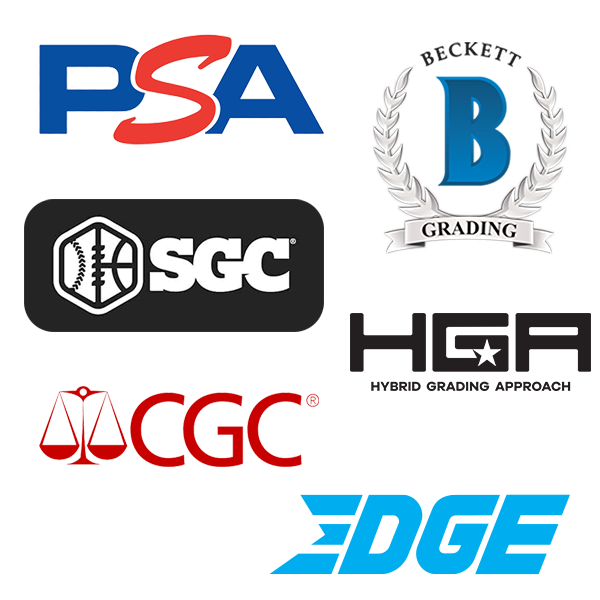
Last updated: August 16, 2026
How are trading cards graded? Professional grading companies first check whether a card is authentic and then assess its condition. Graders examine centering, corners, edges and surface quality before assigning a numerical grade, usually on a scale from 1 to 10. The card is then sealed inside a tamper-evident holder commonly called a slab.
Trading card grading has become an important part of the sports-card and trading card game markets. A grade can make a card easier to identify, compare, protect and sell, but it does not automatically make every card valuable. Rarity, collector demand, historical importance and the number of other graded examples also matter.
At the top end of the hobby, the difference between grades can be dramatic. A
CGC Pristine 10 Alpha Black Lotus
was reported as selling privately for approximately $3 million in 2024. That exceptional sale illustrates how authentication, condition rarity and demand can combine, although most graded cards sell for far less.
This guide explains the trading card grading process, the differences between major grading companies, common collector concerns and how to decide whether submitting a card makes financial sense.
What Is Trading Card Grading?
Trading card grading is an independent assessment of a card’s authenticity and physical condition. A grading company examines the submitted card, assigns a grade and seals it inside a labelled holder. The label normally identifies the card, its set, year, variation and certification number.
Authentication and grading are related but separate steps. Authentication asks whether the card is genuine. Grading asks what condition the genuine card is in. A company may refuse to assign a numerical grade if it believes a card is counterfeit, altered, trimmed, recoloured or otherwise unsuitable for standard grading.
Some cards require far more than a routine authenticity check. A remarkable example is Prerelease Raichu, a mysterious Base Set card whose legitimacy was debated for decades. In 2023, CGC used provenance research, specialized lighting, magnification and X-ray fluorescence analysis to authenticate two examples. The case shows how authentication can sometimes involve historical research and material analysis as well as examination of the card itself.
A slab does not create rarity. It gives buyers a recognised condition opinion and makes the card easier to trade without repeatedly removing it from protection. Collectors should still research the card itself, recent comparable sales and the reputation of the grading company.
What Do Card Graders Look For?
Although exact standards vary, professional graders usually focus on four main areas:
1. Centering
Centering describes the position of the printed design within the card’s borders. A card with evenly balanced borders generally grades better than one with the image noticeably shifted toward one side. Grading companies publish their own centering tolerances, so a card does not always need mathematically perfect 50/50 centering to receive a high grade.
2. Corners
Graders inspect all four corners for whitening, rounding, bends, fraying and compression. Corner wear can be difficult to see from the front, so both sides of the card matter. Pack-fresh cards can still have corner damage caused during manufacturing, packing or shipping.
3. Edges
Card edges are checked for chips, whitening, rough cuts, dents, peeling and other damage. Dark-bordered cards often reveal edge wear more clearly than white-bordered cards. Foil cards may also show silvering or separation along the edge.
4. Surface
Surface inspection can reveal scratches, print lines, stains, fingerprints, dents, indentations, roller marks, loss of gloss and coating damage. Some flaws only appear when the card is tilted beneath strong directional lighting.
Graders may also consider focus, print quality, colour, registration and overall eye appeal. The final grade reflects the card as a whole rather than a simple average calculated by the collector.
How the Trading Card Grading Process Works
-
Choose a grading company and service level.
The submitter selects a service based on the card type, declared value, turnaround expectations and available budget. -
Complete the submission.
Card information is entered online or on a submission form. Requirements vary, so collectors should follow the chosen company’s current instructions. -
Protect and ship the card.
Cards are normally placed in clean sleeves and suitable semi-rigid holders before being packed securely. Read the
Cards Mania guide to shipping trading cards safely
before mailing valuable submissions. -
Receiving and verification.
The company logs the package and checks that the received cards correspond with the submission. -
Authentication.
Specialists examine whether the card is genuine and check for evidence of alteration, trimming, recolouring or restoration. -
Condition assessment.
One or more graders, depending on the company and its internal process, evaluate the card’s centering, corners, edges, surface and overall presentation. -
Final grade and quality control.
The grade and label details are reviewed before encapsulation. Companies may use magnification, high-resolution imaging, measurement systems or other technology alongside human inspection. -
Encapsulation.
The card is sealed inside a protective, tamper-evident slab bearing its grade and certification number. -
Return shipping.
The finished order is shipped back using the return method selected or required for the submission.
Turnaround times and grading fees can change significantly when submission volume rises. Always check the grading company’s own website immediately before sending cards rather than relying on an old price chart or social media post.
PSA vs BGS vs CGC vs SGC
There is no single best grading company for every card. The right choice depends on what you collect, how you plan to sell or display the card and which holder or grading scale your target buyers prefer.
| Company | Commonly Used For | Notable Features |
|---|---|---|
| PSA | Sports cards, Pokémon, TCGs and vintage cards | Widely recognised 1 to 10 scale, certification database and set registry |
| BGS | Modern sports cards and premium TCG cards | Half-point grading and optional or service-dependent subgrade information |
| CGC Cards | Pokémon, Magic, other TCGs, sports and non-sports cards | Strong TCG presence, online certification verification and specialised error-card expertise |
| SGC | Vintage and modern sports cards | Distinctive black insert, 1 to 10 grading scale and population report |
For a broader source-backed comparison, see our
Trading Card Grading Companies Reference,
which tracks grading companies, verified submission routes, service availability and published fees across multiple regions.
One ownership detail is worth knowing: PSA, SGC and Beckett Grading Services operate as separate grading brands, but all three are now owned by Collectors. That does not make their grading standards interchangeable, but it does change the competitive picture behind the labels. For the acquisition history, lawsuit and arguments from both sides, see our guide to the PSA antitrust lawsuit involving Collectors, SGC and Beckett.
Newer services also promote digital imaging, detailed card reports or technology-assisted grading. For a closer look at this trend, read
Can a Robot Grade Your Cards Better Than You?
Technology can improve measurement and documentation, but collectors should not assume that the word “AI” guarantees a more accurate grade. Reputation, transparency, consistency, customer service, market acceptance and resale demand all matter.
What Do Trading Card Grades Mean?
Most major card graders use a numerical scale in which 10 is the highest grade and 1 represents a heavily worn or damaged card. The exact terminology and standards are not identical between companies.
- 10: Usually described as Gem Mint or Pristine, depending on the company and grade designation.
- 9: Mint condition with only a minor flaw or allowance under the company’s standard.
- 8: Near Mint-Mint condition, generally attractive but with visible imperfections upon inspection.
- 7: Near Mint condition with more noticeable wear or production defects.
- 5 to 6: Mid-grade cards with clear signs of handling, wear or manufacturing problems.
- 2 to 4: Heavily worn cards that may have creases, rounded corners, stains or other significant defects.
- 1: Poor condition, although the card may still be collectible if it is rare or historically important.
Do not treat grades from different companies as automatically interchangeable. A PSA 10, BGS 10, CGC 10 and SGC 10 are issued under different published standards and may command different prices in the marketplace.
Why Can Grading Increase a Card’s Value?
Professional grading may add market value because it can provide:
- Authentication: Buyers gain additional confidence that the card is genuine.
- Condition standardisation: A recognised grade makes comparisons easier.
- Protection: Encapsulation reduces direct handling and helps protect against ordinary wear.
- Liquidity: Graded cards can be easier to list, search for and compare online.
- Population data: Collectors can see how many examples have received particular grades.
- Registry demand: Some collectors compete to build highly graded sets.
However, grading costs do not guarantee a profit. A common card in an average grade may be worth less than the combined grading, shipping and insurance expense.
Should You Get Your Trading Cards Graded?
Grading is most likely to make sense when the card is valuable, scarce, frequently counterfeited, historically important, sentimental or likely to receive a grade that buyers actively seek.
Not sure which grading company or submission route makes the most sense for your card? Use our Trading Card Grading Finder to compare grading options by country, card type, autograph requirements, published fees and turnaround times.
Before submitting, consider these questions:
- What have comparable raw cards actually sold for?
- What have comparable graded examples sold for in realistic grades?
- What grade is the card likely to receive?
- How much will grading, shipping and insurance cost?
- Is there strong demand for this card in the chosen company’s slab?
- How many high-grade copies already appear in population reports?
- Are you grading for resale, protection, authentication or personal enjoyment?
Not every low-value modern card should be graded. Conversely, an important vintage card may still be worth authenticating even when it has creases or heavy wear. Grade expectations should be considered alongside rarity and collector demand.
Before submitting, protect promising cards properly. See
How to Store Trading Cards Long-Term
and the
complete trading card supplies guide.
Common Grading Debates and Collector Concerns
Grading is performed according to published standards, but condition assessment still involves judgement. Two experienced collectors can inspect the same borderline card and disagree, and a card may not receive the same grade if submitted again.
Grading consistency
Collectors frequently debate whether standards vary between graders, companies or periods of unusually high submission volume. Individual grade differences do not by themselves prove manipulation. They may result from borderline flaws, lighting, inspection methods, human judgement or differences between published standards.
Cracking and resubmitting
Some owners remove a card from its slab and submit it again in pursuit of a higher grade. This carries risk: the card may receive the same grade, a lower grade, an altered designation or damage during removal. Slab removal should never be attempted casually with a valuable card.
Cross-grading
Cross-grading means submitting a card graded by one company to another company for evaluation. The new grader applies its own standards and is not required to match the original result. Collectors should read the current crossover rules carefully before submitting.
Population reports
Population reports are useful, but they are not perfect estimates of the number of surviving cards. Crack-and-resubmit activity can cause the same physical card to appear more than once unless the old certification is properly removed from the database.
Suspected preferential treatment
Claims that major dealers or influential submitters automatically receive better grades circulate regularly in collector communities. Such allegations should not be presented as established fact without verifiable evidence. A responsible discussion should separate documented incidents, personal experiences and unproven speculation.
Fake slabs and certification labels
Counterfeit holders and forged labels are a genuine buyer risk. A certification number that exists in an online database does not prove that the slab in your hand is genuine, because counterfeiters may copy information from a legitimate card. Compare the physical card with available database images and inspect the holder, label and seller history.
Cards Mania has covered a documented example in
How Forged PSA Labels Fueled a $2M Trading Card Scam.
Pack weighing, deliberately short-printed chase cards and advance information about product releases are broader manufacturing or sealed-product topics. They are not part of the professional card-grading process and should be discussed separately.
How to Protect Yourself When Buying Graded Cards
- Verify the certification number through the grading company’s official database.
- Compare the card with any front-and-back images stored in the certification record.
- Check that the set, card number, variation and grade on the label match the card.
- Inspect the slab for cracks, unusual seams, frosting, damage or signs of tampering.
- Research recent sold listings rather than relying only on unsold asking prices.
- Buy expensive cards from established sellers who offer clear photographs and buyer protection.
- Be cautious when a price is far below the normal market range.
- Keep purchase receipts, listing screenshots and payment records for major transactions.
- Use insured, trackable shipping for cards whose loss would create a serious financial problem.
A graded holder adds confidence, not absolute certainty. The card, holder, certification record, seller and transaction should all make sense together.
Recommended Tools for Graders and Collectors
You do not need expensive laboratory equipment to inspect cards at home. A clean workspace, careful handling and a few suitable supplies are usually enough for basic pre-grading.
-
Card Sleeves and Toploaders:
Use properly sized, card-safe protection before storage or shipping.
Shop on Amazon
|
Shop on eBay -
Digital Scale:
Useful for comparing sealed products or checking shipping weight, but it does not determine a card’s grade.
Shop on Amazon
|
Shop on eBay -
Magnifying Glass or Jeweller’s Loupe:
Helpful for viewing edge wear, print defects and fine scratches.
Shop on Amazon
|
Shop on eBay -
LED Inspection Light:
Directional light can reveal scratches, dents and surface impressions that ordinary room lighting misses. -
Semi-Rigid Card Holders:
Many submission workflows use semi-rigid holders because cards can be removed more safely than from rigid holders. Follow the selected grader’s current instructions.
Never use harsh chemicals, polish, erasers or abrasive cloths on a card. Cleaning or altering a card can cause permanent damage and may result in an altered or rejected designation.
For additional preparation and mailing supplies, see
Best Trading Card Shipping Supplies Every Collector Needs.
Frequently Asked Questions About Trading Card Grading
How are trading cards graded?
Trading cards are authenticated and evaluated for centering, corners, edges, surface quality and overall eye appeal. The grading company assigns a condition grade and seals the card inside a labelled, tamper-evident holder.
What is a Gem Mint 10?
A Gem Mint 10 is a very high grade assigned to a card that meets the grading company’s top or near-top standards. Exact centering tolerances and permitted imperfections vary by company, so collectors should consult the relevant official grading scale.
Does grading always increase a card’s value?
No. Grading may increase buyer confidence and marketability, but low-value cards or cards receiving modest grades may not gain enough value to cover grading and shipping expenses.
Which trading card grading company is best?
The best company depends on the card, collecting category, desired holder, budget and intended resale market. Compare recent sales of the same card in PSA, BGS, CGC and SGC holders before deciding.
Can a pack-fresh card receive a low grade?
Yes. New cards can have off-centering, print lines, edge chipping, dents, scratches or other factory defects before the pack is opened.
Can damaged vintage cards still be graded?
Yes. A rare or important vintage card may remain collectible in a low grade. Authentication can be valuable even when the card has creases or heavy wear.
Can you clean a card before grading?
Removing loose dust carefully is different from attempting to alter or restore a card. Chemicals, polishing, recolouring, trimming and aggressive cleaning can damage the card or lead to an altered designation.
Can a graded card receive a different grade when resubmitted?
Yes. Borderline cards can receive different opinions, and different companies apply different standards. Resubmission also adds cost and introduces handling risk.
Are population reports completely accurate?
Population reports show how many certification entries a company has recorded for a card and grade. They may not equal the number of unique surviving cards because resubmissions, label returns and database corrections can affect the totals.
How can I check what my card is worth?
Compare recent completed sales for the exact card, variation and grade. Do not rely only on active listings because sellers can ask any price they choose. You can also review the
Cards Mania guide to card cataloguing and valuation apps.
Final Thoughts
Learning how trading cards are graded can help you make better submission and buying decisions. Professional grading offers authentication, a recognised condition opinion and physical protection, but it is not a guaranteed investment strategy.
Inspect cards carefully, compare realistic sales, calculate the complete submission cost and choose the grading company that fits the card and its likely market. When buying a slab, verify the certification and examine the physical holder rather than trusting the label alone.
Most importantly, grade cards for a clear reason, whether that reason is resale, authentication, preservation, registry collecting or simply enjoying a favourite card in a professional holder.
A weekly card rundown is coming
Market movers, set drops, and what is worth watching. Sign-ups open soon — the guides stay free either way.

Cards Mania Editorial Team
Cards Mania is an independent trading card media project covering sports cards, Pokémon, TCG, vintage cards, grading, collecting, card storage and hobby news. Articles are produced by the Cards Mania Editorial Team.
Related reads

MTG The Hobbit 2026: Complete Collector & Player Guide
Magic: The Gathering | The Hobbit released August 14, 2026. This updated guide covers HOB and HOC legality, products, mechanics, Dwarvish cards…
Read more →
Palworld Card Game Guide: Cards and Rules
Palworld OFFICIAL CARD GAME launched worldwide on July 30, 2026. This updated guide covers Dawn of Palpagos, rules, rarities, errata, events and…
Read more →
What Is a Rookie Card? Meaning, Examples and Collector Value
A rookie card is generally one of an athlete’s first mainstream cards after reaching the top professional level, but licensing, set type…
Read more →