MTG The Hobbit 2026: Complete Collector & Player Guide
 Cards Mania Editorial Team
·
·
29 min read

Magic: The Gathering | The Hobbit collector & player guide
Magic: The Gathering | The Hobbit is now out. The set released worldwide on August 14, 2026, after Prerelease events from August 7 through August 13 and an MTG Arena launch on August 11. This guide now tracks the released products, HOB versus HOC legality, mechanics, collector treatments, early market evidence and the next scheduled Hobbit products and events.
The main HOB set is Standard legal, while supplemental HOC cards follow different legality rules. The launch lineup includes Play Boosters, Collector Boosters, Bundles, Draft Night and two Scene Boxes, but no traditional Hobbit Commander preconstructed decks. Wizards also confirmed five Dwarvish-language cards, a 2027 Battle of Five Armies Co-Op Kit and approximately 500 copies of the Gleaming Gold Smaug the Magnificent headliner.
The first days after release have already produced serious collector activity. A prerelease $25,000 Gold Smaug buylist offer was followed by two eBay completed-sale records captured by PriceCharting for the exact Gleaming Gold Smaug #M0249 treatment: $24,000 on August 11 and $22,000 on August 15. Two recorded sales do not create a mature market, especially for a card with an announced population of only about 500 copies, but they are stronger evidence than asking prices or convention-floor rumors.
MTG The Hobbit at a glance
Why MTG The Hobbit matters
This is not Magic’s first trip to Tolkien’s world. The Lord of the Rings: Tales of Middle-earth arrived in 2023 and eventually produced one of the most famous trading-card stories of the decade: the unique 1-of-1 The One Ring was sold by Brook Trafton to Post Malone for $2 million.
But The Hobbit is important for a different reason. GameSpot’s interview with the design team describes it as the first-ever Universes Beyond sequel set: Magic is returning to an outside licensed universe it has already adapted rather than moving on to another franchise.
That matters because Wizards is no longer asking only, “Can Magic adapt this world?” It is asking a harder question: can it return without simply printing the same ideas again?
The answer is visible throughout the set. Some LOTR elements return, some are deliberately abandoned, and several small themes from the 2023 release become full draft archetypes. The result is recognizably Middle-earth without being Tales of Middle-earth 2: The Search for More Rings.
If you follow Magic’s other crossover experiments, Cards Mania also has our MTG Star Trek 2026 guide and our earlier look at Magic’s Spider-Man and Avatar crossovers. For the collector-history end of Magic, see our Black Lotus guide.
The Hobbit helped lead Mark Rosewater into fantasy
There is also a genuinely personal connection behind the release. Magic head designer Mark Rosewater wrote that a school librarian recommended The Hobbit to him in sixth grade and that the book helped spark his interest in fantasy. Decades later, he is helping explain Magic’s second trip to Tolkien’s world.
That does not make every Collector Booster a sacred literary artifact. It does, however, give this crossover a little more creative history than the usual “two brands shook hands and the foil machine started humming.”
How The Hobbit differs from MTG Lord of the Rings 2023
Wizards has been unusually open about the design decisions here, and this is where the set becomes much more interesting than a product checklist.
It is a smaller set because the source material is smaller
Rosewater points out the obvious but important difference: The Hobbit is one book of roughly 300 pages, while The Lord of the Rings trilogy is roughly 1,000 pages. The design team therefore built a smaller set and went deeper into individual moments, characters and minor details.
GameSpot’s interview adds a nice example. Set lead Annie Sardelis explained that instead of using generic concepts like “a Mirkwood elf,” the team could sometimes identify the specific elf who served drinks or guarded the cells. One creature was reportedly based on something whose entire appearance in the novel is essentially a Gollum reference.
The entire Limited structure is built around the Five Armies
The set was built for Pick-Two Draft and needed five draft archetypes. The designers connected those five archetypes directly to the five armies of the story:
- White-blue Humans: recruit
- Black-red Goblins: amass
- Black-green Wolves: ferocious
- Red-white Dwarves: storied
- Green-blue Elves: landfall
This is a good example of source material shaping actual gameplay rather than sitting on top of generic mechanics as licensed artwork.
“The Ring tempts you” is gone on purpose
This may be the most interesting design decision in the whole release.
The One Ring appears in The Hobbit, but Wizards deliberately did not bring back the “The Ring tempts you” mechanic from 2023. Rosewater gave several reasons: the Ring is not the driving force of The Hobbit in the same way, the mechanic was more complex than the team wanted, Wizards has become more selective about outside game pieces, and some players felt that using the Ring without a negative consequence missed the flavor.
The Hobbit is not trying to preserve every successful LOTR mechanic. Wizards explicitly sorted old ideas into “must reuse,” “maybe reuse” and “do not reuse” buckets. Sagas and amass came back. The Ring tempts you did not.
MTG The Hobbit release date and key dates
| Event | Date | Collector/player relevance |
|---|---|---|
| Prerelease | August 7-13 | Completed. This was the first regular local-store access to the set. |
| MTG Arena | August 11 | Live. Digital release preceded tabletop launch by three days. |
| Global tabletop release | August 14 | Released. General launch of Play Boosters, Collector Boosters, Bundles, Draft Night and Scene Boxes. |
| Standard Showdown | August 14-September 24 | Relevant because HOB enters Standard immediately. |
| Commander Party round one | August 21-27 | First Hobbit-themed Commander Party window despite no dedicated precons. |
| MTG Arena Direct | August 14-23 | Release-window Arena Direct event awarding physical Hobbit Collector Booster boxes to qualifying players. |
| Magic Spotlight Brisbane | August 28-30 | Major release-season competitive event. |
| Gift Bundle | September 4 | Adds one Collector Booster and surge-foil seasonal Shire lands. |
| Magic Spotlight Dallas | September 4-6 | Second Spotlight event. |
| Heart of the Mountain | September 4-10 | Special Commander event built around control of the Arkenstone. |
| Commander Party round two | September 18-24 | Second Commander Party window. |
HOB vs. HOC: set size and legality
The main set uses code HOB. Wizards lists 60 commons, 55 uncommons, 53 rares and 15 mythic rares, plus five common dual lands and five default-frame basic lands.
Wizards’ Release Notes state that cards with the HOB set code are permitted in Standard, Pioneer and Modern, as well as Commander and other formats, subject to each format’s normal deck-construction, rarity and banned/restricted rules. The important collector shortcut is that HOB is the Standard-legal main set rather than an Eternal-only crossover supplement.
The supplemental code is HOC. Those cards are legal in Commander, Legacy and Vintage, while reprints remain legal in any additional formats where the underlying card is already legal.
MTG The Hobbit cards to watch
The complete official gallery and release notes are now available. Because the set has been on shelves for only nine days, this remains a cards-to-watch list, not a premature “most valuable cards” ranking. Collector Booster variants are already producing five-figure headlines, but most versions still need more completed sales before their prices can be treated as established.
Also worth watching are The Lonely Mountain, Riddles in the Dark, the various Smaug cards, the panoramic Five Armies scene and the returning Middle-earth Classic Artist cards. The main collector question is not simply which card is strongest. It is which combination of character, treatment, scarcity and actual play demand survives the post-release supply wave.
Affiliate links above use Cards Mania’s existing eBay Partner Network campaign and Amazon Associates tag. Listing prices are not completed sales.
MTG The Hobbit mechanics explained
Storied
Storied checks whether you control a permanent with storied and at least three artifacts, legendary permanents and/or Sagas. Once you meet the condition, you gain an enduring story for the rest of the game.
It is essentially a threshold-style evolution of Magic’s older “historic” concept. Once the story is enduring, removing the permanents does not erase it. Middle-earth finally has a mechanic for the person who will still tell everyone about one topdeck six months later.
Recruit
Recruit means draw a card, discard a card and, if the discarded card was nonland, create a 1/1 white Human Soldier token.
Rosewater says the mechanic grew from the five-armies structure. Humans needed a go-wide identity, so recruit became a modified cousin of connive that makes bodies instead of +1/+1 counters.
Hone counters
Hone counters improve Equipment. Each hone counter on an Equipment gives the equipped creature +1/+0.
GameSpot reports that the idea grew from an internal mechanical hackathon exploring ways for red to build power over time. Sting, Bilbo’s Sword is the flagship example.
Returning mechanics
Adventure returns because a book literally about an unexpected adventure was perhaps too obvious to resist. Amass also returns, now including Goblins. Landfall and ferocious, which appeared only lightly in the 2023 set, become full archetype themes for Elves and Wolves.
Official rules changes that arrived with The Hobbit
Wizards published a Magic: The Gathering | The Hobbit Update Bulletin on August 10. The Comprehensive Rules now formally define recruit in rule 701.70, storied in rule 702.195 and hone counters in rule 122.1j. The same update also revised rules for non-Siege battles and changed what qualifies as a mana ability when an activated ability moves cards to or from a library.
That mana-ability change affects a short official list of older cards, including Chromatic Sphere, Selvala, Explorer Returned, Millikin, Deranged Assistant, Charmed Pendant and five Egg cards. Those affected abilities are no longer mana abilities: they use the stack and must be activated at instant speed, rather than during the casting, activation or resolution of another spell or ability or while paying costs to attack or block. This is a broader Magic rules update delivered with The Hobbit, not a special rule that applies only to HOB cards.
Wizards also changed Uvilda, Dean of Perfection’s old “hone counters” to refine counters in Oracle so they do not conflict with the new Equipment counter type. That wording change is not functional for Uvilda.
The Hobbit Limited guide after Prerelease
Prerelease ran from August 7 through August 13. Each Prerelease Pack contained six Play Boosters, one traditional-foil rare or mythic rare promo, four nonfoil seasonal Hobbit basic lands, a deck box and a Spindown die.
The same Limited fundamentals still apply now that the set is released. In Sealed, you build a 40-card deck; about 17 lands remains a sensible starting point, alongside a workable curve and enough creatures to avoid discovering that beautiful lore does not block 4/4s. For Draft, Wizards supports both conventional eight-player drafting and Pick-Two Draft on MTG Arena during the release season.
MTG The Hobbit Limited and Prerelease Cheat Sheet
Prerelease is over, but this quick-reference section remains useful for The Hobbit Sealed and Draft. You do not need to memorize every card before sitting down. You do, however, want a rough idea of what each color pair is trying to accomplish before your pool or draft turns the table into a small cardboard archaeological dig.
The quick-reference sheet below covers the set’s five main Limited archetypes, a practical starting point for Sealed deck building, and three of the mechanics you are most likely to encounter: recruit, storied and hone counters.

The Five Hobbit Limited Archetypes at a Glance
The Limited structure of The Hobbit is unusually easy to remember because Wizards built it around the Five Armies from the story. Humans, Goblins, Wolves, Dwarves and Elves each occupy one of the set’s five central two-color strategies.
| Colors | Archetype | Main Game Plan |
|---|---|---|
| WU | White-Blue Humans | Recruit, filter cards and build a wider battlefield. |
| BR | Black-Red Goblins | Amass Goblins, apply pressure and use Army synergies. |
| BG | Black-Green Wolves | Build around creatures with power 4 or greater and ferocious payoffs. |
| RW | Red-White Dwarves | Combine artifacts, legendary permanents and Sagas while working toward storied. |
| GU | Green-Blue Elves | Use landfall and lands-matter synergies to generate value. |
Basic Sealed Deck-Building Advice
A 40-card deck with roughly 17 lands is a sensible starting point for Prerelease Sealed. From there, let the cards you actually opened make the decisions.
Start by identifying your strongest creatures, removal and other high-impact cards. Then look at which colors have enough depth to form a consistent deck rather than simply chasing the rarest cards in your pool.
- Aim for consistency first. Two well-supported colors will usually serve you better than a heroic attempt to play everything interesting you opened.
- Prioritize creatures and interaction. Limited games are still won by presenting threats and answering the opponent’s best ones.
- Treat splashes carefully. A third color can be worthwhile when your fixing supports it, but one spectacular mythic is not automatically a reason to turn your mana base into an Unexpected Journey of its own.
- Pay attention to synergy. A modest card that actively advances your archetype may be more useful than a generically stronger card that does not fit the deck.
Recruit
Recruit is a new keyword action. When you recruit, you draw a card, then discard a card. If the card you discarded is a nonland card, you create a 1/1 white Human Soldier creature token.
That makes recruit more than simple card filtering. It can improve your hand, put useful cards into the graveyard and build your battlefield at the same time. White-blue Humans is the color pair most closely associated with the mechanic.
Storied
Storied watches for two conditions: you must control a permanent with storied, and you must control three or more artifacts, legendary permanents and/or Sagas.
Once both are true, you gain an enduring story for the rest of the game. Importantly, you do not lose that status later if those permanents leave the battlefield. Red-white Dwarves is the Limited archetype built most directly around reaching that threshold.
Hone Counters
Hone counters improve Equipment. Each hone counter on an Equipment gives the creature equipped with it +1/+0.
The counter itself carries that rules meaning, so Equipment can become progressively more threatening as hone counters accumulate. It is a simple mechanic on the surface, but repeated Equipment bonuses can make combat math noticeably less friendly.
The full guide above also covers Gleaming Gold Smaug, the five Dwarvish-language cards, HOB vs. HOC legality, Collector Boosters, Scene Boxes, product prices and the biggest collector questions surrounding The Hobbit.
One useful design clue: storied was balanced primarily around Limited. In Commander, where mana rocks, legendary permanents and artifacts are everywhere, reaching the condition can be much easier.
MTG The Hobbit products and official MSRP
Play Boosters, Collector Boosters, Bundles, Draft Night and both Scene Boxes released on August 14. The Gift Bundle remains scheduled for September 4, 2026. Wizards published U.S. MSRP for the individual products but did not publish a separate booster-box MSRP in the collector guide, so retailer display prices should not be mislabeled as an official Wizards box MSRP.
| Product | Official MSRP | Main contents | Best fit |
|---|---|---|---|
| Play Booster | $6.99 | 14 Magic cards + token | Draft, Sealed, deck building |
| Collector Booster | $37.99 | 15 Magic cards with premium slots | Premium treatments and Gold Smaug chance |
| Bundle | $69.99 | 9 Play Boosters, seasonal foils, lands, promo, storage box | Balanced collector/player package |
| Gift Bundle | $89.99 | 9 Play Boosters, 1 Collector Booster, surge-foil seasonal lands and Bundle extras | Collector who wants one premium pack |
| Draft Night | $119.99 | 12 Play Boosters, 1 Collector Booster, 90 basics, tokens, insert | Four-player Pick-Two Draft |
| Scene Box | $41.99 | 3 Play Boosters, 6 foil scene cards, 6 art cards, easel | Display and Tolkien art collectors |
Play Booster boxes
A Play Booster box contains 30 Play Boosters plus one Box Topper. The topper contains one traditional-foil Middle-earth Classic Artist card.
Collector Booster boxes
A Collector Booster box contains 12 Collector Boosters plus one Box Topper. Each Collector Booster contains 15 Magic cards: five traditional-foil commons, four foil uncommons, one traditional-foil Middle-earth Journey basic land, two traditional-foil rares or mythics, two nonfoil Booster Fun cards and one foil Booster Fun card, plus an art card or traditional-foil double-sided token.
The premium slots are where Collector Boosters separate themselves from Play Boosters. Dwarvish-language cards, surge foils, extended-art HOC cards and the approximately 500-copy Gleaming Gold Smaug all live here. Wizards publishes percentages for the normal premium categories, but it does not provide a simple “1 in X Collector Boosters” odds figure for Gleaming Gold Smaug because the total Collector Booster population is undisclosed.
Draft Night may be the sleeper product
Draft Night is built for a four-player Pick-Two Draft and includes the boosters, basics and tokens needed to play. If your goal is actually to spend an evening playing Magic with friends, rather than testing whether a dragon can breathe fire directly onto your credit limit, it is a surprisingly coherent product.
The Hobbit collector treatments
Gleaming Gold Smaug
The headline treatment is the approximately 500-copy Gleaming Gold Smaug the Magnificent. It appears only in Collector Boosters, can be found in Collector Boosters of any language and is always printed in English.
40 Middle-earth Classic Artist cards
Wizards is bringing back 40 cards originally released in 2023’s Tales of Middle-earth with new borderless Classic Artist presentation. Wizards classifies all 40 as mythic rare within this bonus treatment.
Every Play Booster box and Collector Booster box receives one traditional-foil Classic Artist Box Topper. Nonfoil and surge-foil copies can also appear in Collector Boosters.
Book Cover cards
There are four rare and six mythic rare Book Cover cards. Nonfoil and traditional foil versions can appear in Play and Collector Boosters; surge foils are Collector Booster exclusive.
This may be the most thematically successful treatment in the release. It looks like a collector concept born from The Hobbit rather than a foil process that happened to be standing nearby.
Dragon Hoard frames
The Dragon Hoard group contains six uncommons, 11 rares and eight mythics. Nonfoil and traditional foil versions can appear in both booster types, while surge foils are Collector Booster only.
The red version of the frame includes Smaug’s missing scale. Tiny detail, extremely Tolkien, guaranteed to be spotted by somebody before they finish reading the rules text.
Scene cards and Scene Boxes
Two panoramic scenes are distributed through boosters: the nine-card The Five Armies Clash! scene by Denman Rooke and the six-card Fight with the Great Goblin scene by Ted Nasmith.
Separately, Wizards is selling two Scene Boxes: Crack the Plates and Treasures of Smaug. Each contains six mechanically unique traditional-foil borderless scene cards, six art cards, three Play Boosters and a display easel. Nonfoil versions of the new scene cards can appear in Collector Boosters.
Middle-earth Journey and seasonal Hobbit lands
Journey basic lands follow Bilbo’s party through Middle-earth and cover all five basic land types. The four seasonal Hobbit lands are different: Spring, Summer, Fall and Winter are all Plains.
Prerelease Packs contain the four seasonal lands in nonfoil. Bundles contain traditional foils. Gift Bundles contain surge foils. Apparently even the seasons cannot convince Hobbits to move somewhere with more Swamps.
Extended-art HOB and HOC cards
Collector Boosters contain extended-art versions of 26 HOB rares and two HOB mythics. They also contain nine nonfoil extended-art HOC mythics. Traditional-foil default-frame versions of those nine HOC cards are planned for the Battle of Five Armies Co-Op Kit in 2027.
Gleaming Gold Smaug: what we actually know
Approximately 500 Gleaming Gold Smaug the Magnificent headliner cards will be printed. They appear only in Collector Boosters. The headliner is mechanically identical to other Smaug the Magnificent treatments and is always English-language.
Is Gold Smaug serialized?
Wizards has announced an approximate total population, but it does not describe the card as an individually numbered run. In other words, this is not a normal “217/500” serialized card.
That has produced the community shorthand “proto-serialized”: publicly constrained supply without printed serial numbers. It is a useful description of the concept, but it is collector slang, not Wizards terminology.
What are the Gold Smaug pull odds?
Unknown. Wizards has published the approximate number of Gold Smaugs but has not published the total Collector Booster print run. Without knowing how many Collector Boosters exist, no one can calculate a defensible “1 in X packs” probability from public information.
If you see exact odds online, ask where the denominator came from. “A guy did some math on Discord” is not a production disclosure.
What has Gleaming Gold Smaug actually sold for?
The prerelease market began with a $25,000 buylist offer from Journey’s End Games, but completed sales now provide better evidence. PriceCharting’s completed-sales record lists two eBay completed-sale records for the exact Smaug the Magnificent #M0249 Gleaming Gold Foil: $24,000 on August 11, 2026 and $22,000 on August 15, 2026.
Those are ungraded/raw completed-sale records, but this is still an extremely thin market. Two recorded sales for a card with an announced population of approximately 500 copies are not enough to establish a dependable everyday market price. The earlier roughly $30,000 Gen Con story remains an unverified convention-floor report and is no longer needed as the main valuation evidence.
Gold Smaug vs. the 1-of-1 One Ring
| Card | Supply | Numbering | Verified market evidence |
|---|---|---|---|
| 1-of-1 The One Ring | Exactly one | Unique 1-of-1 | Verified $2 million sale to Post Malone in 2023 |
| Gleaming Gold Smaug | Approximately 500 | Not announced as individually numbered | PriceCharting records eBay completed-sale listings at $24,000 on Aug. 11 and $22,000 on Aug. 15; market remains extremely thin |
Gold Smaug is already one of the defining collector stories of the set, but its market is nowhere near mature. It also lacks the absolute uniqueness that powered The One Ring story.
If you pull one, this is not the moment to discover that your last penny sleeve has a split seam. Our trading-card storage and shipping guide covers sleeves, rigid holders, humidity and safe handling.
The five Dwarvish-language cards
Wizards has confirmed five mythic-rare reprints presented in Dwarvish:
- Arcane Signet
- Dwarven Warriors
- Mox Amber
- The Reaver Cleaver
- Treasure Vault
They appear only in Collector Boosters, in nonfoil or traditional foil, and are always printed in the Dwarvish treatment.
How often do Dwarvish cards appear?
Wizards actually gives useful collation percentages here. Each Collector Booster has two nonfoil Booster Fun slots, and a Dwarvish-language card is listed at 1.5% in each slot. The foil Booster Fun slot lists a traditional-foil Dwarvish-language card at 1.6%.
That is real published collation data. It is much more useful than opening two boxes and declaring a universal pull rate from the wreckage.
No Hobbit Commander precons, but Commander is not being ignored
There are no traditional The Hobbit Commander preconstructed decks in Wizards’ published August product lineup.
That absence has generated more discussion than you might expect, partly because the 2023 LOTR release had four Commander decks and partly because The Hobbit contains plenty of legendary characters that look perfectly happy sitting in the command zone.
Community reaction is mixed. Some players are disappointed, especially Tolkien fans who liked battling the four LOTR precons against each other. Others are relieved that 2026 is not adding even more Commander precons to an already crowded release calendar.
The Battle of Five Armies Co-Op Kit is real
Wizards has officially confirmed a Battle of Five Armies Co-Op Kit planned for 2027. The nine HOC mythics appearing in Collector Boosters as nonfoil extended-art cards are scheduled to appear there in traditional-foil default frames.
Wizards has not yet published the full configuration, but it has teased that Bilbo, Unexpected Adventurer referencing battles is a clue.
Not confirmed: that traditional Commander decks were designed and cancelled, or that the Co-Op Kit is made from abandoned precon material.
The interesting news and controversies around MTG The Hobbit
1. The set is Magic’s first Universes Beyond sequel
GameSpot’s interview with the design team explicitly calls The Hobbit the first Universes Beyond sequel set. The production team also said keeping much of the LOTR team together shortened the usual Universes Beyond development cycle.
This may matter beyond Tolkien. If returning to a successful outside universe works, Magic has a template for revisiting other licensed worlds rather than treating every crossover as one-and-done.
2. Pumpkins have reopened a Tolkien argument
One Fall seasonal Plains depicts pumpkins in the Shire, which somehow managed to turn a basic land into a horticultural constitutional crisis.
GamesRadar reported that the card revived the old question of whether pumpkins fit Middle-earth’s largely Old World agricultural flavor. The counterargument is that Tolkien also used things like potatoes and pipe-weed/tobacco analogues, so the prosecution’s case is not exactly airtight.
It is a tiny controversy, but it is also very on-brand for Tolkien fandom: somebody notices a vegetable and suddenly there are footnotes.
3. The Hobbit Secret Lair followed three days after tabletop release
Secret Lair x The Hobbit: A Marvelous Mathoms Superdrop launched on August 17 at 9 a.m. PT, three days after the tabletop release. Wizards released five Hobbit-themed drops, including Second Breakfast and Beyond, Over the Edge of the Wild and Smaug’s Spoils.
The official announcement also includes a small but useful product correction: He Who Walks Unseen is the official name of one drop, while the printed envelope says “He That Walks Unseen.” Individual Secret Lair product pages are sold while supplies last, so availability should be checked at the time of purchase rather than treated as permanent stock.
The timing delighted Secret Lair collectors and annoyed anyone who thought release weekend might involve a brief period in which Wizards was not asking them to buy another Hobbit product.
4. Wizards corrected a digital card-gallery attribution
The official card image gallery now notes that digital renderings of The One Ring from The Hobbit were updated to show the proper artist attribution. Wizards describes this as a correction to the digital renderings, not a gameplay erratum to the printed card.
5. Premium-product concentration is a real collector concern
Community discussion repeatedly points to the same issue: many of the flashiest treatments, Dwarvish cards, HOC extended arts and Gold Smaug live in Collector Boosters.
That does not make Play Boosters bad. They remain the proper Limited product and still contain Book Cover, Dragon Hoard and scene treatments. But collectors chasing the most exclusive variants are being pointed very aggressively toward the premium product.
The Hobbit theory board: interesting, but not confirmed
This is the section where the red string goes on the wall. Every item below is either interpretation or community speculation, not an official Wizards statement.
Gold Smaug is a test of scarcity without serial numbers
The approximately 500-copy print run creates most of the collector psychology of a serialized card without giving each copy an individual number. That has led some collectors to call it a “proto-serialized” experiment.
The theory is plausible as market analysis, but Wizards has not said Gold Smaug is a test for a new long-term chase-card model.
The $25,000 bounty may have anchored the earliest Gold Smaug price expectations
The five-figure buylist offer arrived before broad price discovery. PriceCharting later recorded eBay completed-sale listings at $24,000 and $22,000, close enough to the bounty to keep that headline range in collectors’ minds.
That does not prove manipulation or causation. With only a handful of known transactions, it is impossible to separate genuine scarcity demand from the psychological effect of an early public bounty.
The 2027 Co-Op Kit may be the real Commander-style continuation
No traditional Hobbit Commander decks exist at launch, but Wizards is supporting Commander events and has already tied nine HOC mythics to a 2027 cooperative product. It is reasonable to think Wizards wants Hobbit Commander interest to continue beyond release season.
What we cannot say is that Commander precons were cancelled or transformed into the Co-Op Kit. There is no public evidence for that stronger claim.
The Hobbit could temporarily pull old LOTR cards back into the spotlight
Returning to Middle-earth naturally renews attention on the 2023 release. At the same time, 40 Classic Artist cards add new versions of older cards. That creates opposing forces: renewed franchise attention on one side, fresh supply and version competition on the other.
So “all old LOTR cards will rise” and “all old LOTR cards will fall” are equally lazy conclusions.
What should collectors actually buy?
The correct answer depends on whether you want to play Magic, collect Tolkien art, chase premium variants or reenact Smaug’s relationship with personal finance.
If you want to play
Start with Play Boosters, Draft Night, singles or current store events. HOB is a proper Standard-legal set with a deliberate Limited environment.
If you collect Tolkien art
Scene Boxes, Book Cover cards, Journey lands and seasonal lands offer a much clearer collecting target than blindly chasing one premium card.
If you want Dwarvish cards
They are Collector Booster exclusive, but buying the exact single you want is usually the more controlled route than repeatedly opening $37.99 boosters.
If you want Gold Smaug
Collector Boosters are the only sealed route, but the public data does not let us calculate the true pull probability. Treat the hunt as entertainment, not expected-value certainty.
Bundle vs. Gift Bundle
The standard Bundle gives you nine Play Boosters and traditional-foil seasonal Hobbit lands. The Gift Bundle, releasing September 4, adds one Collector Booster and upgrades the seasonal lands to surge foil.
For a Tolkien collector who wants the special lands and exactly one premium pack, the Gift Bundle is a more controlled option than buying an entire Collector Booster display.
Scene Boxes may age better as display pieces than as “investments”
The appeal is straightforward: you know which six foil scene cards you are getting, you receive the matching art cards and easel, and you still get three Play Boosters. That certainty matters in a product line dominated by chase mechanics.
Do not confuse first-week pricing with established value
The set has been on general sale for only nine days. Supply is still entering the market, excitement remains high and many premium versions have only a small number of completed transactions. Condition, language, exact treatment, fees, liquidity and future supply all matter. A handful of release-window sales can be useful evidence without being a stable long-term price.
For a high-value pull, protection matters immediately. Cards Mania’s long-term card storage guide and collector gear guide cover sleeves, toploaders, binders and safer storage.
Cards Mania verdict
Magic: The Gathering | The Hobbit has a clearer identity than a simple return to Middle-earth had any right to have.
The best decision may be the one Wizards did not make: it did not drag every popular 2023 mechanic back just because people recognized it. The Ring tempts you is gone. The Five Armies become the Limited structure. Small 2023 themes such as landfall and ferocious get promoted. Adventure fits naturally. Storied and recruit come directly from the needs of this particular story.
For collectors, Gold Smaug is the obvious headline, but it should not swallow the entire set. Dwarvish Mox Amber, Book Cover cards, Dragon Hoard treatments, Scene Boxes, Ted Nasmith artwork and the seasonal Shire lands all offer collecting lanes that do not require winning a 500-copy treasure hunt.
The risks are equally obvious. Collector Booster exclusivity is heavy. HOB versus HOC is needlessly easy to misunderstand. There are no traditional Commander precons. Secret Lair arrived almost immediately. And although Gleaming Gold Smaug now has documented five-figure completed sales, the premium market is still too young to call stable.
Players should start with Play Boosters, Draft Night, singles or current store events. Tolkien collectors should look hard at Scene Boxes and singles. Premium collectors should know exactly which treatment they are chasing. Gold Smaug hunters should set the entertainment budget before opening the first pack.
Bilbo went there and back again. Your money is under no contractual obligation to do the same.
For more crossover releases and collector analysis, browse the Cards Mania Magic: The Gathering section.
MTG The Hobbit 2026 FAQ
When did MTG The Hobbit release?
Magic: The Gathering | The Hobbit released worldwide on tabletop on August 14, 2026. Prerelease ran August 7-13, and the set launched on MTG Arena on August 11.
Is MTG The Hobbit Standard legal?
Yes. Cards with the HOB set code enter Standard and are also permitted in Pioneer, Modern, Commander and other formats subject to each format’s normal rules and banned/restricted lists. HOC has separate legality.
What is HOC?
HOC is the supplemental Eternal-legal Hobbit set code. HOC cards are legal in Commander, Legacy and Vintage, with reprints also legal anywhere the underlying card is already legal.
What is the rarest confirmed MTG The Hobbit card?
Gleaming Gold Smaug the Magnificent is the confirmed headline rarity. Wizards says approximately 500 copies were printed for Collector Boosters.
Is Gold Smaug serialized?
Wizards has announced an approximate 500-copy population but has not described the cards as individually numbered serialized copies.
Can Gold Smaug appear in Play Boosters?
No. Wizards says the Gleaming Gold headliner appears only in Collector Boosters.
What are the Gold Smaug pull odds?
They cannot be calculated from public data because Wizards has not disclosed the total Collector Booster print run.
What completed sales are recorded for Gleaming Gold Smaug?
PriceCharting currently records eBay completed-sale listings for the raw Gleaming Gold Smaug #M0249 at $24,000 on August 11 and $22,000 on August 15, 2026. The sample is too small to treat either figure as a stable market value.
What are the five Dwarvish-language cards?
Arcane Signet, Dwarven Warriors, Mox Amber, The Reaver Cleaver and Treasure Vault.
Does The Hobbit have Commander precons?
No traditional Hobbit Commander preconstructed decks are included in the published August 2026 product lineup.
What is the Battle of Five Armies Co-Op Kit?
It is a planned 2027 Hobbit product. Wizards has confirmed that traditional-foil default-frame versions of nine HOC mythics will appear there, but the complete product configuration has not yet been revealed.
Why did Wizards remove “The Ring tempts you”?
Mark Rosewater said the Ring is less central to The Hobbit, the 2023 mechanic was more complex than desired, it required an outside game piece, and some players felt its lack of a negative effect was a flavor mismatch.
Are all four seasonal Hobbit lands Plains?
Yes. Spring, Summer, Fall and Winter are four separate full-art Shire designs, and all four are Plains.
When did The Hobbit Secret Lair launch?
A Marvelous Mathoms Superdrop launched August 17, 2026 at 9 a.m. PT. Individual drops are limited while supplies last.
Sources and further reading
- Wizards of the Coast: Magic: The Gathering | The Hobbit official product page
- Wizards: Collecting Magic: The Gathering | The Hobbit
- Wizards: The Hobbit card image gallery
- Wizards: The Hobbit mechanics
- Wizards: The Hobbit Prerelease guide
- Wizards: The Hobbit Release Notes
- Wizards: The Hobbit Update Bulletin
- Wizards: The Hobbit MTG Arena event schedule
- Wizards: Where to Play The Hobbit
- Mark Rosewater: Returning to Middle-earth with Universes Beyond
- Mark Rosewater: My Entry into Fantasy and The Hobbit
- Wizards: A Marvelous Mathoms Secret Lair Superdrop
- GameSpot: interview with The Hobbit design team
- GamesRadar: the Middle-earth pumpkin debate
- The Washington Post: Post Malone’s $2 million One Ring purchase
- Reddit / MTG Finance: Gold Smaug $25,000 buylist discussion and unverified Gen Con sale reports
- PriceCharting: completed eBay sales record for Gleaming Gold Smaug #M0249
- Reddit / MagicTCG: community reaction to the lack of Commander precons
Prices, availability and secondary-market values can change rapidly after release. Completed sales are more useful than asking prices or buylists, but a tiny sample can still be misleading. Cards Mania does not provide financial or investment advice.
A weekly card rundown is coming
Market movers, set drops, and what is worth watching. Sign-ups open soon — the guides stay free either way.

Cards Mania Editorial Team
Cards Mania is an independent trading card media project covering sports cards, Pokémon, TCG, vintage cards, grading, collecting, card storage and hobby news. Articles are produced by the Cards Mania Editorial Team.
Related reads
Palworld Card Game Guide: Cards and Rules
Palworld OFFICIAL CARD GAME launched worldwide on July 30, 2026. This updated guide covers Dawn of Palpagos, rules, rarities, errata, events and…
Read more →
What Is a Rookie Card? Meaning, Examples and Collector Value
A rookie card is generally one of an athlete’s first mainstream cards after reaching the top professional level, but licensing, set type…
Read more →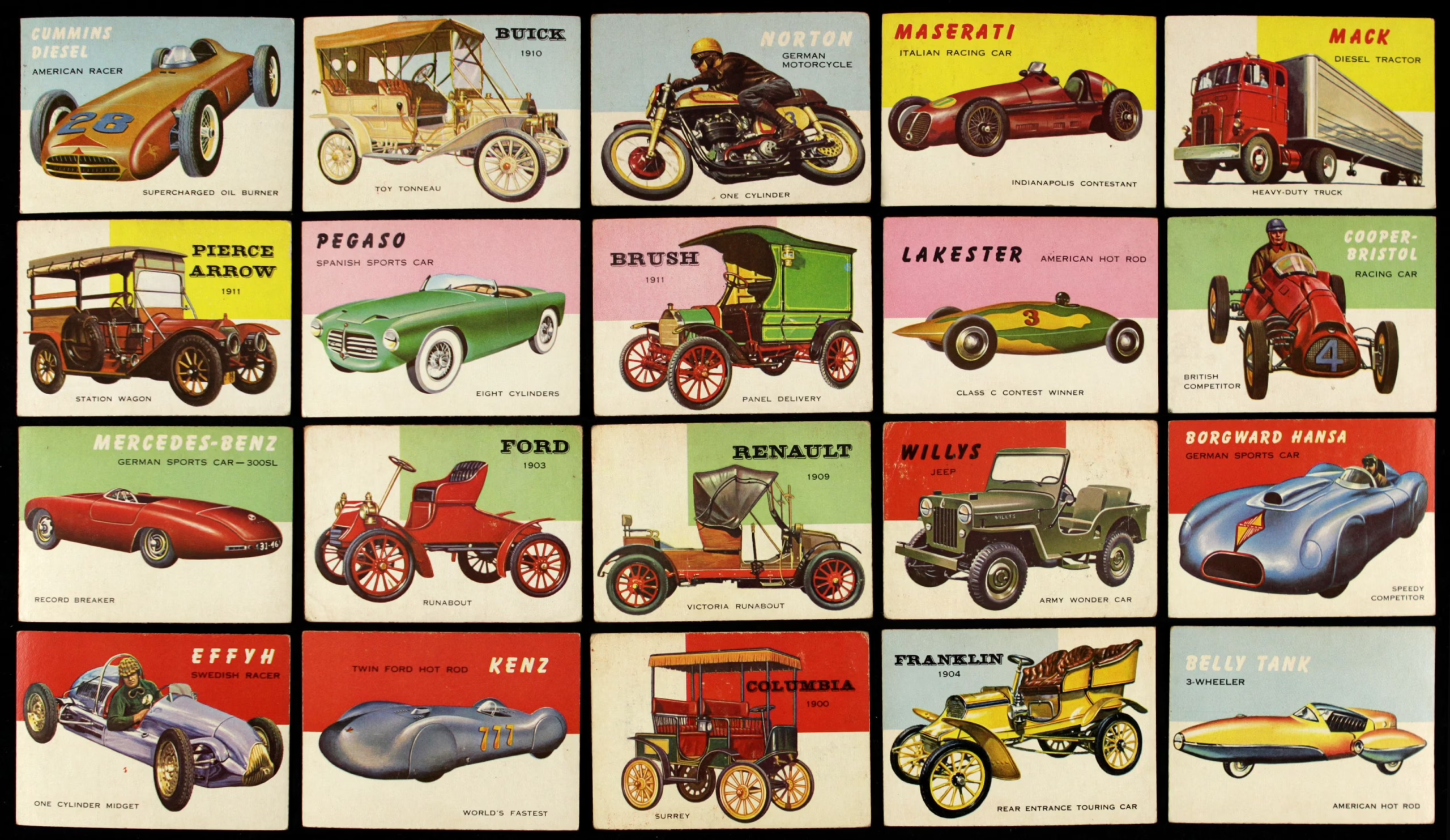
1954 Topps World on Wheels: The Collector’s Guide to This Wildly Underrated Set
Dating Topps World on Wheels is messy: a contest points to 1953, wrappers point to 1954, and the final 20 cards feature…
Read more →