Best Trading Card Collection Apps in 2026: 6 Compared
 Cards Mania Editorial Team
·
·
8 min read
Cards Mania Editorial Team
·
·
8 min read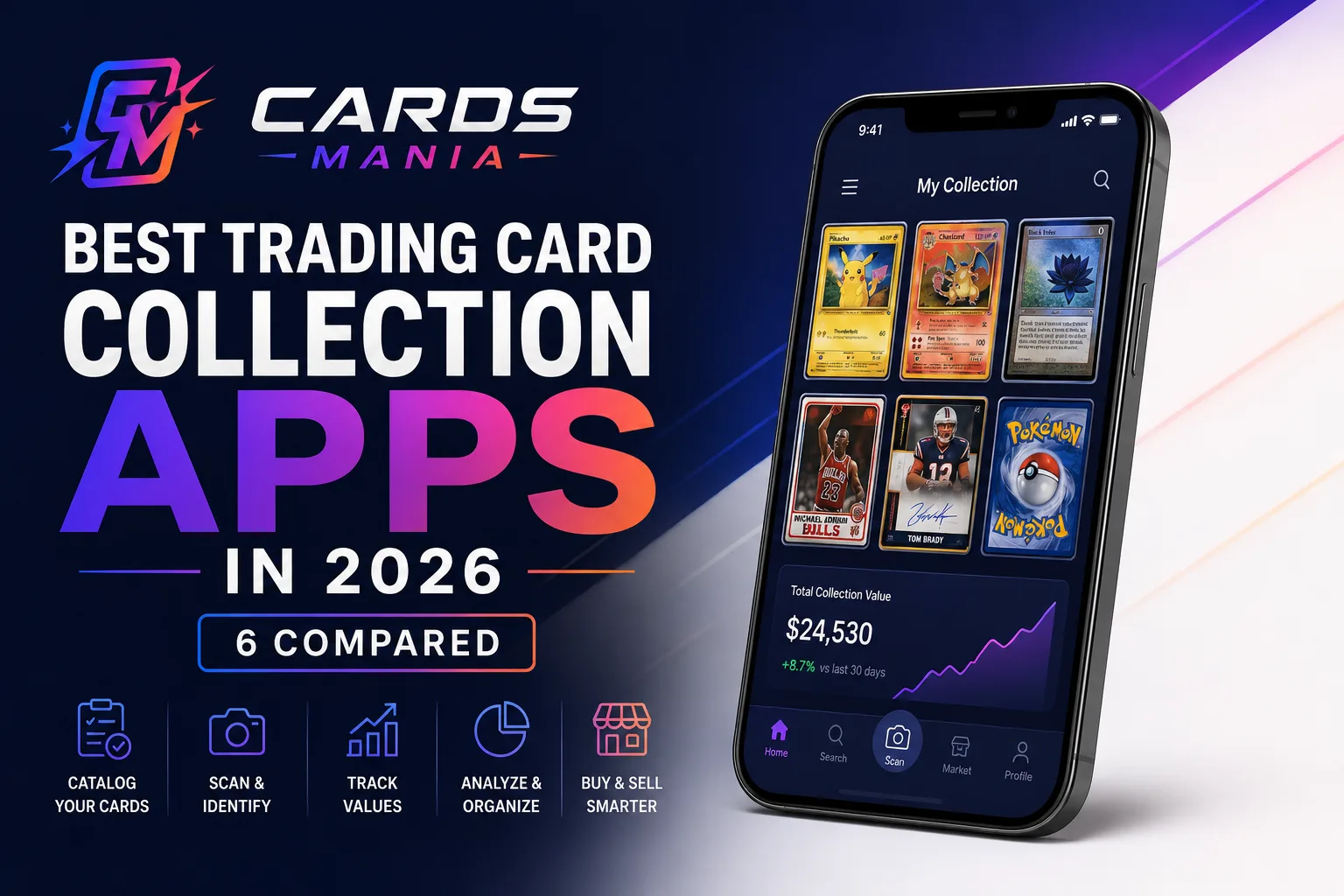
Last updated: August 16, 2026
Quick answer: There is no single best trading card collection app for every collector. TCDB is strongest for checklists and manual set tracking. Collectr is a good fit for multi-game TCG portfolios. CollX and Ludex focus on camera scanning, with CollX adding a marketplace and Ludex offering several scanner-focused plans. Card Ladder is better for deep sold-price research and graded-card data. Sports Card Investor and Market Movers suit collectors who follow sports-card trends.
The best app depends on what is slowing you down. A set builder needs accurate checklists. Someone sorting a box of modern cards may care most about camera recognition. A dealer needs exports and selling tools. A collector considering an expensive purchase needs reliable comparable sales, not just a colorful portfolio total.
We checked the current product and pricing pages for the six tools below on August 16, 2026. Features and prices can change, so confirm the checkout screen before starting a paid plan.
Affiliate disclosure: Some links in this guide are affiliate links. If you buy through them, Cards Mania may earn a commission at no extra cost to you. That does not affect how the apps are compared.
Best trading card collection apps compared
| Tool | Best for | Entry option | Main limitation |
|---|---|---|---|
| TCDB | Set checklists, manual cataloging, want lists and trades | Free account | Manual workflow and advertising on the free site |
| Collectr | Pokemon, MTG and other TCG portfolios | Free plan | Market estimates still need sold-listing checks |
| CollX | Scanning, organizing and selling many card categories | Free app with paid tiers | Scans can confuse parallels and similar versions |
| Ludex | Camera-first identification and eBay listing workflows | Free plan with 200 identified scans monthly | Useful capacity and selling tools move into paid tiers |
| Card Ladder | Historical sales, graded-card research and portfolio analysis | Free plan; Pro available | Pro costs more than casual collectors may need |
| Sports Card Investor | Sports-card trends, market movers and deal research | Free content and paid Market Movers tools | Investment-style features can be excessive for basic cataloging |
Best starting point: Pick two or three tools and test the same ten cards. Include a common base card, a numbered parallel, a graded card, an older card, and one obscure item. Check identification, recent sales, correction tools, export options, and the time needed to add each card. That small test exposes more than an app-store description.
How to choose the right card app
- For set building: prioritize checklist depth, variation notes, want lists and trading tools.
- For scanning boxes: test how often the app identifies the exact year, set, card number and parallel.
- For value research: look for dated sold transactions and filters, not only one estimated price.
- For selling: check marketplace fees, exports, listing limits, payment rules and dispute handling.
- For TCG collections: confirm language, printing, foil treatment and regional-set coverage.
- For sports cards: check raw and graded coverage, grading-company filters and population data.
A scanner is a shortcut, not an authentication or grading service. Similar cards can differ by a small foil pattern, serial stamp, copyright line or image variation. Always confirm the card manually before trusting a value.
1. TCDB: Best for checklists and set builders
TCDB, the Trading Card Database, is a community-maintained archive rather than a scanner-first app. Registered users can track collections by set, create want lists, mark cards for sale or trade, record graded cards and use transaction tools.
The strength is detail. If you collect older sports issues, non-sport sets, obscure releases or many variations, a community checklist can be more useful than a camera that guesses from the front image. TCDB also works well when completion percentage matters more than a live portfolio graph.
The tradeoff is time. Entry is more manual than camera-led tools, and the free website can feel busy. Pricing is also less suitable for a quick automated appraisal because some information is supplied by users. Treat it as a catalog and checklist first.
2. Collectr: Best for multi-TCG portfolios
Collectr is built around trading card games. Its official plan page lists support for more than 25 TCGs, unlimited portfolios on the free tier, social and marketplace features, and a paid Pro plan with longer pricing history, scanning, exports and additional filters.
It is a practical choice for someone holding Pokemon, Magic: The Gathering, Yu-Gi-Oh!, Lorcana, One Piece and other games in one collection. The mobile presentation makes it easy to see a portfolio at a glance, while set and product coverage includes raw cards, graded cards and sealed products.
The weak point is shared by most portfolio apps: an attractive market total can look more certain than it is. Language, condition, printing, foil treatment and marketplace differences can all move the real price. Use the total as a working estimate, not a guaranteed liquidation value.
3. CollX: Best all-in-one scanner and marketplace
CollX scans sports, TCG and non-sport cards, adds identified cards to a collection and supports buying and selling through its marketplace. CollX says its prices are calculated from public marketplace transactions and updated daily. Its FAQ explains that the system may present several possible matches when variants exist.
That combination is useful if you want one app to identify, organize and list cards. The paid Pro tier adds larger collections, enhanced scanning credits, CSV export, seller features and CollX AI. A higher Gold tier targets active sellers with additional marketplace benefits.
The main caution is identification. A base card, refractor and numbered parallel can share most of the same design. Current user feedback also includes complaints about manual corrections, missing variants and marketplace disputes. Confirm every match and read the current seller-protection terms before listing valuable cards.
4. Ludex: Best camera-first scanner
Ludex focuses on photographing a card, identifying it, showing recent sales and adding it to a collection or eBay listing workflow. As checked for this update, the free plan included 200 identified scans per month and a portfolio of up to 60 cards.
Paid Lite, Standard and Pro plans increase category access, collection capacity and eBay listing allowances. That gives collectors a clearer upgrade path than apps with only one expensive subscription.
Ludex is still not immune to bad matches. Lighting, glare, card orientation, unusual parallels and brand-new releases can affect recognition. The app itself advises users to verify card information and select the correct parallel before saving a value.
5. Card Ladder: Best for sold-price research
Card Ladder is strongest when the question is not “what card is this?” but “what do relevant sales actually show?” The company says its database contains more than 100 million historical sales and public records going back to 2000. Pro adds full Sales History, collection tracking, CL Value estimates, camera search, population reports, alerts, comparisons and advanced filters.
The free plan covers basic price-guide and market tools. Pro was $20 per month or $200 per year when checked for this update. That price is easier to justify for active buyers, sellers and graded-card collectors than for someone checking a few cards each month.
Read our detailed Card Ladder review for the current Free vs Pro breakdown. Card Ladder’s About page also explains how it reviews sales and publishes pricing-method context.
6. Sports Card Investor and Market Movers: Best for trend monitoring
Sports Card Investor combines market content with Market Movers, its paid research platform. It is aimed at collectors who watch changes in sports-card prices, search for deals and compare market performance rather than simply checking boxes on a set list.
This approach can be useful for active sports-card buyers, but the investment framing is not for everyone. Trend lists can encourage chasing cards after a move has already happened. Search and pricing tools can also miss new or obscure cards, so verify the actual transactions behind any chart.
Market Movers pricing and feature limits depend on the current plan. Check the official registration page before subscribing and test whether your players, sets and grades appear in the database.
How to value cards without trusting one app
- Identify the exact card. Match year, set, card number, parallel, language, serial number, autograph and grade.
- Find several completed sales. One auction can be an outlier.
- Use the same condition. A clean raw card and a PSA 10 are not comparable.
- Check the sale date. Player news, new sets and reprints can change demand quickly.
- Inspect listing quality. Weak titles, poor photos, bundles and shipping terms affect results.
- Subtract selling costs. Fees, postage, insurance and returns reduce the amount a seller keeps.
For a direct marketplace cross-check, review recent results on eBay. Do not treat active asking prices as completed-sale evidence.
A sensible two-tool setup: use TCDB or Collectr to maintain the catalog, then use Card Ladder or direct sold listings when a buying or selling decision needs stronger price evidence.
Frequently asked questions
What is the best free trading card collection app?
TCDB is a strong free option for manual checklists and set tracking. Collectr offers a useful free tier for multi-TCG portfolios. CollX and Ludex can be tested free when scanning matters, but their limits and paid features differ.
Which app is best for scanning sports cards?
Ludex and CollX are the clearest camera-first options in this comparison. Test both with difficult parallels and older cards because no scanner identifies every version correctly.
Which app is best for Pokemon card collections?
Collectr is designed for multi-TCG portfolios and is a natural starting point for Pokemon. Card Ladder, CollX and Ludex also cover Pokemon, but their strongest use cases differ.
Can a card app tell me exactly what my collection is worth?
No. An app can estimate value from available market data. Condition, variant, timing, fees and buyer demand determine the amount you can actually receive.
Is Card Ladder better than CollX?
Card Ladder is better suited to historical sales research, graded-card data and market analysis. CollX is more scanner and marketplace oriented. The better choice depends on whether research or fast cataloging is the priority.
How we checked this guide: Cards Mania reviewed official feature, pricing and help pages for TCDB, Collectr, CollX, Ludex, Card Ladder and Sports Card Investor on August 16, 2026. Company database and accuracy claims are presented as company claims. User complaints are treated as signals to test, not universal outcomes.
Check current prices for cards in your catalog:
A weekly card rundown is coming
Market movers, set drops, and what is worth watching. Sign-ups open soon — the guides stay free either way.

Cards Mania Editorial Team
Cards Mania is an independent trading card media project covering sports cards, Pokémon, TCG, vintage cards, grading, collecting, card storage and hobby news. Articles are produced by the Cards Mania Editorial Team.
Related reads
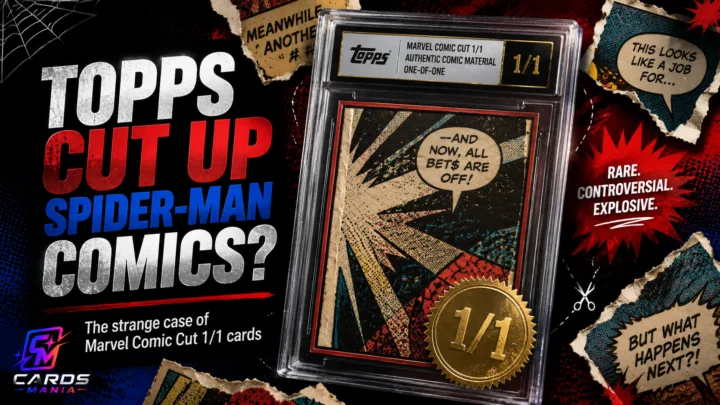
Would You Cut Up a Classic Spider-Man Comic for a 1/1 Card? Topps Did
Topps turned pieces from 15 classic Spider-Man comic issues into 1/1 Comic Cut cards for 2026 Mint Marvel. We traced the source…
Read more →
2026 Topps Chrome x Jennie: Checklist, Odds, Autos & Relics
Topps Chrome x Jennie brings K-pop photocard culture into the traditional trading card hobby with Refractors, numbered parallels, on-card autographs and concert-worn…
Read more →
1933 Goudey Nap Lajoie #106: The Card Nobody Could Pull
Collectors could pull Babe Ruth and Lou Gehrig from 1933 Goudey packs, but card #106 was missing. Nap Lajoie #106 was printed…
Read more →