
What Is a Rookie Card? Meaning, Examples and Collector Value
 Cards Mania Editorial Team
·
·
19 min read
Last updated: . Rookie-card terminology and major sale examples were rechecked for this update.
A rookie card, usually shortened to RC, is a card tied to the beginning of an athlete’s recognized top-level collecting career. In modern products an RC logo often identifies rookie status, but there is no single rule that works perfectly across every sport, manufacturer and era.
The important part: a rookie card is not automatically valuable just because it is a rookie card. Most are inexpensive. The market usually rewards a mix of player importance, demand, scarcity, condition, grading, set reputation, timing and collector preference.
Quick Answer: What Is a Rookie Card?
Rookie card meaning: a rookie card is generally a mainstream card issued in the season the hobby recognizes as a player’s rookie-card year. Modern cards often use an RC logo to mark rookie status.
What does RC mean on a card? RC stands for Rookie Card. Topps’ own hobby glossary uses RC as shorthand for Rookie Card, while its baseball rookie guide also distinguishes an RC from prospect-era cards such as 1st Bowman issues. Topps Rookie Card glossary; Topps MLB rookie-card guide.
But RC does not always mean “the player’s first card.” Prospect cards, minor-league cards, stickers, regional issues and other early cards can predate a recognized rookie card. Vintage collecting also predates today’s RC-logo system entirely.
| Term | What it usually means | Usually treated as an RC? |
|---|---|---|
| Rookie Card / RC | A recognized mainstream card from the player’s rookie-card season; modern examples may carry an RC logo. | Yes, when the hobby and product recognize it as such. |
| Prospect card / 1st Bowman | A card issued before the player reaches the top professional level. Baseball prospect cards can be extremely important. | Usually no. Prospect status and rookie-card status are normally discussed separately. |
| First card | The earliest known card or collectible appearance, which may be regional, minor-league, sticker-based, oddball or unlicensed. | Not automatically. |
| Pre-rookie card | An early card that predates the hobby’s recognized rookie card. | Usually no. |
| Rookie insert | An insert featuring a rookie outside the regular base checklist. | Often called a rookie insert rather than a traditional base RC. |
| Rookie parallel | A parallel version of a recognized rookie card, such as a numbered color or Refractor. | Yes, as a parallel of the RC, but it is a different version from the base card. |
Sponsored eBay marketplace placement
What Counts as a Rookie Card?
The rookie-card label can be confusing because the hobby has overlapping traditions. A player’s earliest card may appear before the official rookie season, a prospect card may be more desirable than the later RC, and a modern RC logo does not retroactively solve vintage debates.
- Recognized rookie card: usually a mainstream card tied to the player’s rookie-card year.
- Prospect card: issued before the athlete reaches the top professional level; especially important in baseball.
- First card: simply the earliest known appearance on cardboard or another card-like collectible. It may or may not be accepted as an RC.
- Rookie insert: features a rookie but sits outside the regular base checklist.
- Pre-rookie: predates the recognized rookie card.
- “True rookie”: hobby shorthand, not a universal certification. Collectors use the phrase differently, so the exact card should always be named.
Best practice when buying or selling: identify the exact year, set, card number and version instead of relying on the word “rookie.” If licensing is part of the debate, our licensed vs unlicensed trading cards guide explains why logos and official rights matter.
Why Rookie Cards Matter
Rookie cards matter because they combine three things collectors love: timing, story and status.
- Timing: the card comes from the early stage of a player’s career.
- Story: it captures the moment before greatness is fully confirmed.
- Status: it becomes the card many collectors associate with that player’s collecting identity.
For a superstar, the rookie card often becomes the cardboard version of “this is where it started.” For a Hall of Famer, champion, record breaker or cultural icon, that early card can become far more desirable than later cards produced after fame was already established.
That does not mean every rookie card becomes valuable. Every year produces piles of rookies. Only a small number become hobby cornerstones.
Why Collectors Love Rookie Cards
Rookie cards feel like a beginning. A LeBron James rookie card is not just a LeBron card. It is a card from the moment when the basketball world was still discovering what “King James” would become. A Tom Brady rookie card is not just another football card. It is tied to a sixth-round draft pick who became one of the most decorated quarterbacks in NFL history.
That before-and-after feeling matters.
Rookie cards also give collections a clear focus. A collector can build around one player, one team, one draft class, one sport, one set or one era. Rookie collecting gives structure to a hobby that can otherwise feel like trying to organize a tornado in penny sleeves.
Why Some Rookie Cards Become Worth Millions
Some rookie cards become extremely valuable because several powerful forces collide at once:
- the player becomes historically important;
- the card comes from a respected or iconic set;
- high-grade copies are genuinely difficult to find;
- the card has strong visual or cultural appeal;
- collector demand remains deep for years;
- the card has a story people remember;
- a sale happens in a strong market with serious buyers competing.
That combination is rare. A card needs more than a rookie label. It needs importance, scarcity, condition and demand. Ideally, it also needs a story strong enough to survive market cycles.
This is why a lower-grade copy of a legendary vintage card can be worth more than thousands of modern rookie cards in perfect condition. Scarcity and cultural weight can beat shiny cardboard muscle.
Sponsored eBay marketplace placement
Why Most Rookie Cards Are Not Worth Much
Most rookie cards are not worth much because most players do not become hobby icons. That is not cruel. That is just how collecting works.
A rookie card can fail to gain value for many reasons:
- the player never becomes a star;
- the product was printed in huge quantities;
- too many parallels and versions dilute demand;
- graded population numbers are high;
- the card has no strong visual identity;
- collectors prefer another card from the same player;
- the market hype fades after release.
The rookie label gets attention. It does not create guaranteed value. A common rookie of a forgotten player from a heavily printed set may still be a common card. Sometimes the most valuable thing about it is the lesson it teaches before the next purchase.
The Biggest Factors Behind Rookie Card Value
1. Player or Character Importance
The biggest driver is usually the person or character on the card. Hall of Famers, champions, record breakers, cultural icons, generational talents and fan favorites attract long-term demand.
In sports, that usually means elite career achievement. In entertainment and TCG collecting, it may mean character popularity, game importance, nostalgia or historical status.
2. Demand
Scarcity alone is not enough. A card can be rare and still unwanted. The hobby rewards cards that many collectors actually want to own.
Demand can come from fans, set builders, investors, player collectors, team collectors, nostalgia collectors and high-end trophy-card buyers. The strongest cards appeal to more than one group.
3. Scarcity
Scarcity can come from low print runs, serial numbering, short prints, old surviving populations, condition sensitivity or a small number of high-grade copies.
Important distinction: a card can be printed in large numbers but still be scarce in top condition. Vintage cards often work this way because age, handling, centering problems, gum stains, corner wear and childhood storage methods damaged the supply of clean copies.
4. Condition and Grading
Condition matters because collectors pay premiums for cards that look better and grade higher. Corners, edges, surface, centering, print quality, gloss, creases, stains, scratches and trimming concerns can all affect value.
Professional grading companies such as PSA, BGS, SGC and CGC authenticate cards and assign condition grades. A high grade does not magically make every card valuable, but for important cards, grade can create huge price differences.
A PSA 10 copy of an important modern rookie may sell for far more than a PSA 9 if the PSA 10 population is low. For a common card with thousands of PSA 10 copies, the premium may be much smaller.
Basic protection before grading is non-negotiable. Most collectors start with standard penny sleeves for raw trading cards and 35pt top loaders for standard-size cards before deciding what is worth slabbing.
Sponsored eBay marketplace placement
5. Set Importance
Collectors care about the set. A rookie from an iconic flagship product usually carries more weight than a rookie from an obscure or less collected release.
Examples include Topps baseball flagship, 1986-87 Fleer basketball, 1979-80 O-Pee-Chee hockey, Bowman Chrome prospect cards, Topps Chrome, Panini Prizm, Upper Deck Exquisite and other products that have become central to their categories.
6. Design and Eye Appeal
Collectors are human. A card that looks great often gets more attention. A clean photo, strong color, memorable pose, beautiful refractor finish, iconic design or perfect patch window can all help.
Sometimes a card becomes famous partly because it is simply unforgettable. Hobby history is not built only on spreadsheets. Cardboard has charisma too.
7. Historical and Cultural Relevance
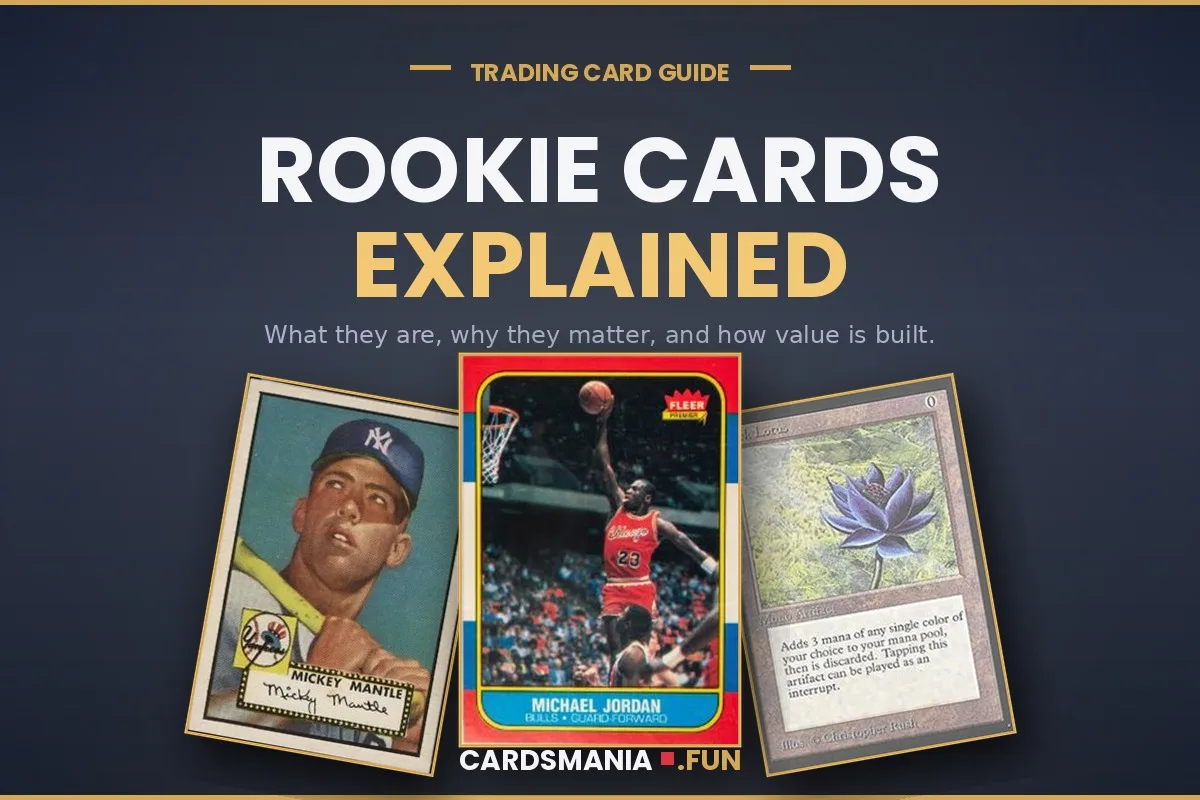
Some cards become symbols of an era. The 1952 Topps Mickey Mantle is tied to the golden age of baseball cards. The 1986-87 Fleer Michael Jordan is tied to basketball’s collecting boom and Jordan’s global status. Alpha Black Lotus is tied to the earliest days of Magic: The Gathering.
When a card becomes bigger than the checklist, it enters a different collecting category.
8. Timing
Markets move with timing. A player’s rookie cards may move significantly after a championship, MVP season, record-breaking performance, documentary, Hall of Fame announcement, transfer, retirement or sudden burst of media attention.
That can create opportunity. It can also create danger. Buying into hype at the top is how many collectors learn that cardboard can, in fact, bite.
Famous Cards That Explain Rookie Card Value and Terminology
1952 Topps Mickey Mantle
The 1952 Topps Mickey Mantle is one of the most famous sports cards ever made. An SGC Mint+ 9.5 example sold through Heritage Auctions in August 2022 for $12.6 million. Heritage confirmed the sale.
Important rookie card note: the 1951 Bowman Mickey Mantle #253 is Mantle’s recognized rookie card. The 1952 Topps #311 is his first Topps card and arguably his most famous card, but it is not his rookie card. PSA CardFacts makes that distinction explicitly. It is a perfect example of why the most valuable or most famous early card is not always the rookie card.
T206 Honus Wagner
The T206 Honus Wagner is one of the most legendary cards in the hobby, but it is not a rookie card. It belongs here because it proves how rarity, historical importance and collector mythology can outweigh rookie status. An SGC 2 example sold privately for $7.25 million in August 2022, a transaction reported by Goldin and ESPN.
The card’s power comes from the blend of player importance, rarity, tobacco-card history and collector mythology. In other words, not exactly the same formula as “new rookie parallel numbered to /499.”
1986-87 Fleer Michael Jordan
The 1986-87 Fleer Michael Jordan #57 remains one of the most recognizable basketball rookie-era cards ever made, but the terminology is more complicated than older hobby shorthand suggests. PSA now grades the officially licensed 1984-85 Star set and describes it as containing the first official trading cards of Michael Jordan, Charles Barkley and Hakeem Olajuwon. The Fleer #57 still has enormous mainstream hobby recognition, while the earlier 1984-85 Star #101 has become much more important in modern grading and market discussions. PSA explains its Star grading policy here.
A PSA 10 example sold for $840,000 in July 2021. The archived sale remains visible through Fanatics Collect. The number is a historical sale, not a current value estimate.
1979-80 O-Pee-Chee Wayne Gretzky
The 1979-80 O-Pee-Chee Wayne Gretzky #18 is the most famous hockey rookie card. One of the two PSA 10 examples known at the time sold for $3.75 million in a private transaction through Heritage Auctions in May 2021. Heritage reported the transaction.
Its appeal comes from Gretzky’s status, the importance of the O-Pee-Chee issue and the difficulty of finding elite-condition examples. Centering and rough-cut edges are major parts of the collecting story here. The card proves that condition scarcity can be just as important as original print scarcity.
2003-04 Upper Deck Exquisite Collection LeBron James Rookie Patch Autograph
The 2003-04 Upper Deck Exquisite Collection LeBron James RPA is a modern high-end basketball giant. A BGS 9 copy of the /23 parallel sold privately through PWCC for $5.2 million in April 2021. ESPN reported the sale.
This card shows how modern rookie value can be built from several ingredients at once: superstar player, on-card autograph, premium brand, limited numbering, patch appeal, condition and set prestige.
2000 Playoff Contenders Tom Brady Championship Ticket Autograph
The 2000 Playoff Contenders Tom Brady Championship Ticket Autograph is one of football’s most important modern rookie cards. A BGS 9 example numbered 8/100 sold through Lelands for $3,107,372.40 in June 2021. Lelands’ archived lot confirms the result.
Its appeal is straightforward: Brady’s career arc, an on-card autograph, low numbering and one of the most respected rookie ticket designs in the hobby.
Alpha Black Lotus and TCG Collecting
Black Lotus is not a rookie card in the sports-card sense. Magic: The Gathering does not work like baseball or basketball. There are no rookie seasons for spells.
Still, Black Lotus is useful for understanding the wider trading card market. It comes from Magic’s earliest era, has huge game and hobby importance and has extreme collector demand. A CGC Pristine 10 Alpha Black Lotus sold privately for $3 million in April 2024. CGC reported the transaction. For the full card history, see our Black Lotus collector guide.
The lesson is simple: in TCGs, collectors often chase first printings, early iconic cards, powerful cards, rare versions, tournament history, nostalgia and condition rather than sports-style rookie status.
🔎 Browse current graded rookie card listings on eBay
Sponsored eBay marketplace placement
Parallels, Refractors, Autos, Short Prints and Modern Chase Cards
Modern rookie cards can be a jungle. A shiny jungle, but still a jungle.
Base Rookie Card
The standard version from the main checklist. Usually the cleanest rookie card reference point.
Parallel
A parallel is a different version of the same card, often with a different color, foil, pattern, serial number or finish. A Gold /10 parallel may be far scarcer and more valuable than the base rookie.
Refractor
A refractor is a chromium-style parallel associated strongly with Topps Chrome and similar products. Refractors are loved because they look fantastic and often have strong collector demand.
Autograph Rookie
A rookie autograph includes the player’s signature. On-card autographs usually carry more appeal than sticker autographs, although demand depends on the player, product and card design.
Rookie Patch Autograph
A rookie patch autograph, often called an RPA, combines rookie status, autograph and memorabilia. High-end basketball and football collectors often treat elite RPAs as trophy cards.
Short Print
A short print is produced in smaller quantities than regular cards. Some short prints are confirmed by manufacturers. Others are inferred by collectors from market supply and pack odds. Confirm before paying a premium.
One-of-One
A one-of-one card has only one copy of that version. It is the ultimate scarcity label, but even a one-of-one needs demand. A one-of-one card of an unwanted player can still struggle.
Rookie Cards in Sports Cards
Sports cards are where the rookie card concept is strongest. Baseball, basketball, football, hockey, soccer and Formula 1 all have their own rookie traditions.
Baseball often separates prospect cards from rookie cards. Basketball places huge weight on mainstream rookie cards and premium RPAs. Football loves key rookie autographs and numbered parallels. Hockey has its own classic rookie structures, including Young Guns in modern Upper Deck collecting. Formula 1 has a more complicated modern rookie history because official RC designations are newer and pre-Topps cards are debated.
The practical rule: each sport has its own rookie culture. Do not assume basketball logic applies cleanly to baseball, or that Formula 1 works like football. Card collecting enjoys making simple things complicated. It is basically part of the subscription.
Rookie-Style Collecting in TCGs and Entertainment Cards
Trading card games and entertainment cards do not usually use rookie cards the same way sports cards do.
In TCGs such as Magic: The Gathering or Pokémon, collectors often care about:
- first printings;
- early set appearances;
- first edition stamps;
- shadowless or limited print features;
- iconic characters;
- playable power;
- nostalgia;
- condition scarcity;
- grading population;
- sealed product history.
A Charizard card is not a rookie card in the baseball sense. Black Lotus is not a rookie card in the basketball sense. But both show how early, iconic cardboard can become culturally and financially important.
Entertainment cards work differently again. A first card appearance of a famous character, actor, movie moment or franchise can matter, but the market may be smaller and less standardized than major sports.
Sponsored eBay marketplace placement
Beginner Rookie Card Checklist
Before buying a rookie card, ask these questions:
- Is this actually a recognized rookie card? Check whether it is a true rookie, prospect card, insert, parallel, first card or seller-created label.
- Is the player or character important? Talent, achievements, fanbase and cultural relevance matter.
- Is demand real? Check completed sales, not just asking prices.
- How common is the card? Look at print run, serial numbering and graded population where available.
- What condition is it in? Corners, edges, surface and centering can change value fast.
- Is it graded? If graded, verify the certification number with the grading company.
- Is the set respected? Some sets matter more than others.
- Is the price based on hype? Be careful after championships, viral posts, documentaries and sudden market spikes.
- Can it be stored safely? Sleeves, top loaders, semi-rigid holders, magnetic holders and storage boxes are not optional for valuable cards. 35pt magnetic one-touch holders for standard cards work well for raw cards you actually care about.
- Would it still be enjoyable if the price dropped? That question saves a lot of pain.
🔎 Compare rookie card listings on eBay by player, sport and grade
Common Mistakes When Buying Rookie Cards
Thinking Every Rookie Card Is Valuable
This is the biggest beginner mistake. Rookie cards can be valuable. Most are not. A rookie label is a starting point, not a price guarantee.
Confusing Asking Prices With Real Value
A seller can ask anything. Completed sales matter more. A card listed for $999 and never sold is not a $999 card. It is a dream with shipping options. For deeper sales-history research and a look at one of the hobby’s better-known comp tools, see our Card Ladder review and Free vs Pro breakdown.
Ignoring Condition
A card may look fine in a small photo and still have soft corners, print lines, edge chipping, surface dents or centering problems. Condition is value.
Overpaying for Raw Cards as If They Are Guaranteed Gem Mint
Not every clean raw card becomes a PSA 10 or BGS 9.5. Grading is strict, and tiny flaws matter. Pay raw prices for raw cards unless the condition is extremely clear and the risk is understood.
Buying the Wrong Rookie Version
Many players have multiple rookie cards. Some are base cards. Some are inserts. Some are parallels. Some are retail exclusives. Some are not widely collected. Know which version the market actually wants.
Chasing Hype Without a Plan
Buying rookie cards during peak hype can be expensive. A player can have one great game, one viral highlight or one playoff run, and prices can jump. They can also fall when attention moves elsewhere.
Ignoring Authentication
Counterfeits exist, especially for famous rookie cards. Expensive raw cards should be approached carefully. For high-value purchases, authentication and reputable sellers matter.
Storing Valuable Cards Carelessly
If you own graded rookies, keep them in graded card storage boxes for PSA and SGC slabs. Slabs can scratch, corners can dent and labels can scuff. Storage matters more than collectors expect.
Sponsored eBay marketplace placement
Are Modern Rookie Cards Good Investments?
Modern rookie cards can perform well, but they are not guaranteed investments. The modern market has more products, more parallels, more grading, more hype cycles and more data than the vintage market.
That creates opportunity, but also noise.
A modern rookie card may need several things to hold long-term value: elite player performance, strong demand, limited supply, respected set, desirable version, high grade and collector confidence. Remove a few of those ingredients and the card may struggle.
The safer mindset is collecting first, investing second. Buy cards that make sense, understand the risk, compare real sales and avoid treating every rookie like a retirement plan in a plastic slab.
Final Thoughts
Rookie cards are important because they sit at the start of a collecting story. They capture the early moment before the legacy is complete. That is why collectors chase them, debate them, grade them, protect them and occasionally spend house-level money on them.
The rookie label alone is not enough. A valuable rookie card usually needs the right player, the right set, the right scarcity, the right condition, the right demand and the right story.
For beginners, the best approach is simple: learn the difference between true rookies, first cards, prospect cards, inserts, parallels and autographs before spending serious money. For experienced collectors, the rookie card market remains one of the most interesting places in the hobby because it blends history, performance, nostalgia and speculation into one tiny rectangle.
Start with knowledge. Protect the cards properly. Check completed sales. Respect condition. And remember: not every rookie becomes a legend. Some just become very well-protected commons.
🔎 Search active rookie card listings on eBay
Sponsored eBay marketplace placement
FAQ: Rookie Cards
What is a rookie card?
A rookie card is generally one of the first mainstream trading cards of an athlete after that athlete reaches the top professional level of their sport. In modern products, rookie cards often carry an RC logo or rookie designation.
Are rookie cards always valuable?
No. Most rookie cards are not worth much. Value depends on the player or character, demand, scarcity, condition, grading, set importance, historical relevance and market timing.
Why are rookie cards expensive?
Some rookie cards are expensive because they feature important players, come from iconic sets, are scarce in high grade, have strong collector demand and carry historical or cultural significance.
What makes a rookie card rare?
A rookie card can be rare because of low print runs, serial numbering, short printing, limited distribution, age, condition scarcity or a low number of high-grade copies in grading population reports.
What is the difference between a rookie card and a first card?
A rookie card is usually tied to a player’s first recognized mainstream card after reaching the top level. A first card may be any earlier appearance, including prospect, regional, sticker, oddball or pre-rookie releases.
What is a true rookie card?
“True rookie” is hobby shorthand rather than a universal certification. Many collectors use it for a player’s regular base card from a mainstream licensed set in the recognized rookie-card year, but usage varies by sport and era. For buying or selling, identify the exact year, set and card number instead of relying on the phrase alone.
Are prospect cards rookie cards?
Not usually. Prospect cards show players before they reach the top professional level. Some prospect cards are very valuable, especially in baseball, but they are usually discussed separately from official rookie cards.
Should beginners collect rookie cards?
Yes. Rookie cards can be a great collecting focus for beginners, provided they research carefully, check completed sales, understand condition and avoid assuming every rookie card will rise in value.
Are modern rookie cards good investments?
Some modern rookie cards can become valuable, but they are risky. Modern products often include many versions, parallels and graded copies. Collectors should research supply, demand, player performance and real sale prices before buying expensive cards.
Do TCG cards have rookie cards?
Not in the same way as sports cards. TCG collectors usually focus on first printings, early iconic cards, first edition versions, playable power, rarity, condition and nostalgia rather than sports-style rookie cards.
A weekly card rundown is coming
Market movers, set drops, and what is worth watching. Sign-ups open soon — the guides stay free either way.

Cards Mania Editorial Team
Cards Mania is an independent trading card media project covering sports cards, Pokémon, TCG, vintage cards, grading, collecting, card storage and hobby news. Articles are produced by the Cards Mania Editorial Team.
Related reads
MTG The Hobbit 2026: Complete Collector & Player Guide
Magic: The Gathering | The Hobbit released August 14, 2026. This updated guide covers HOB and HOC legality, products, mechanics, Dwarvish cards…
Read more →
Palworld Card Game Guide: Cards and Rules
Palworld OFFICIAL CARD GAME launched worldwide on July 30, 2026. This updated guide covers Dawn of Palpagos, rules, rarities, errata, events and…
Read more →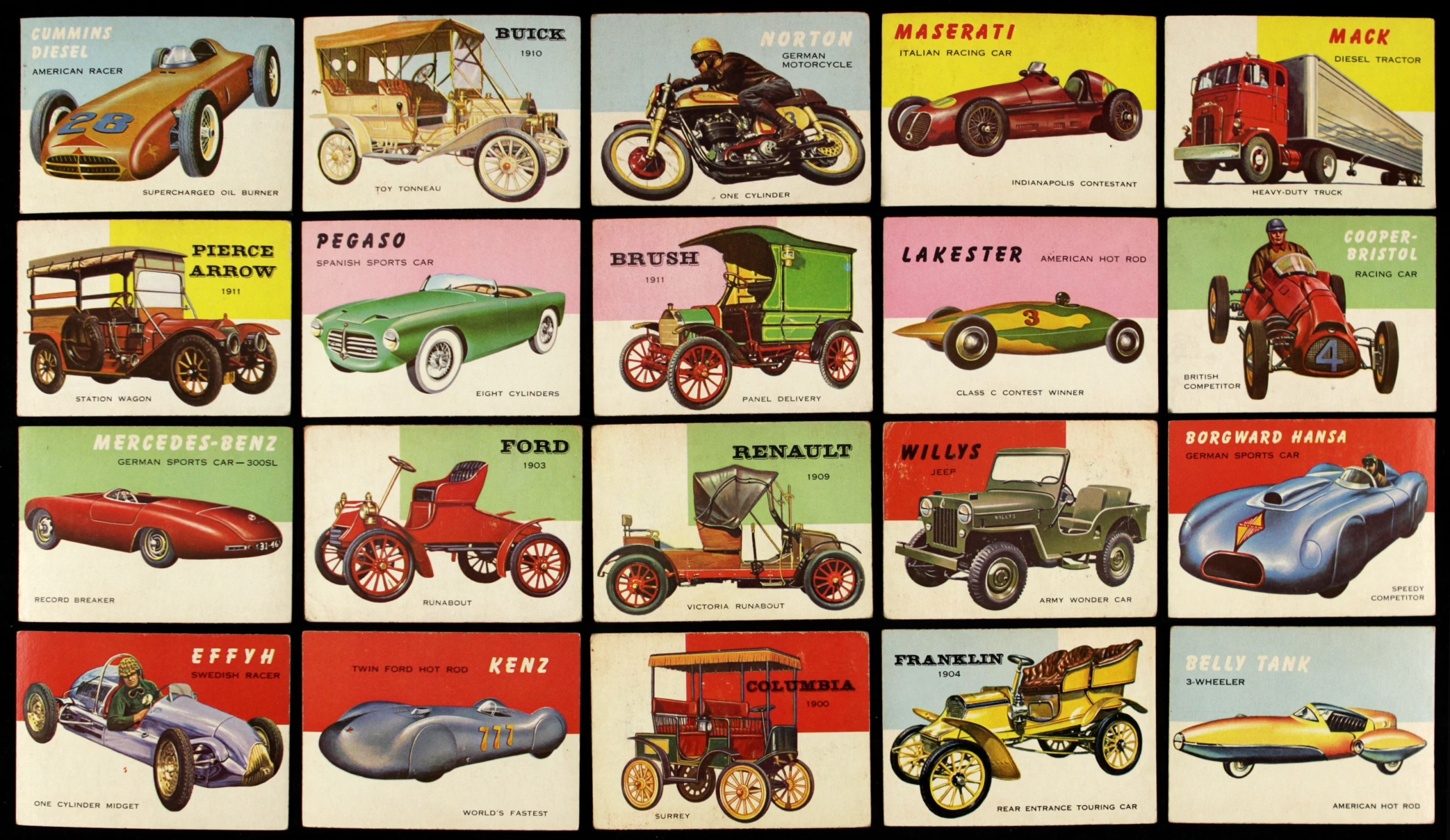
1954 Topps World on Wheels: The Collector’s Guide to This Wildly Underrated Set
Dating Topps World on Wheels is messy: a contest points to 1953, wrappers point to 1954, and the final 20 cards feature…
Read more →