
How to Store Trading Cards Long-Term (So They Don’t Betray You Later)
 Cards Mania Editorial Team
·
·
10 min read
Cards Mania Editorial Team
·
·
10 min read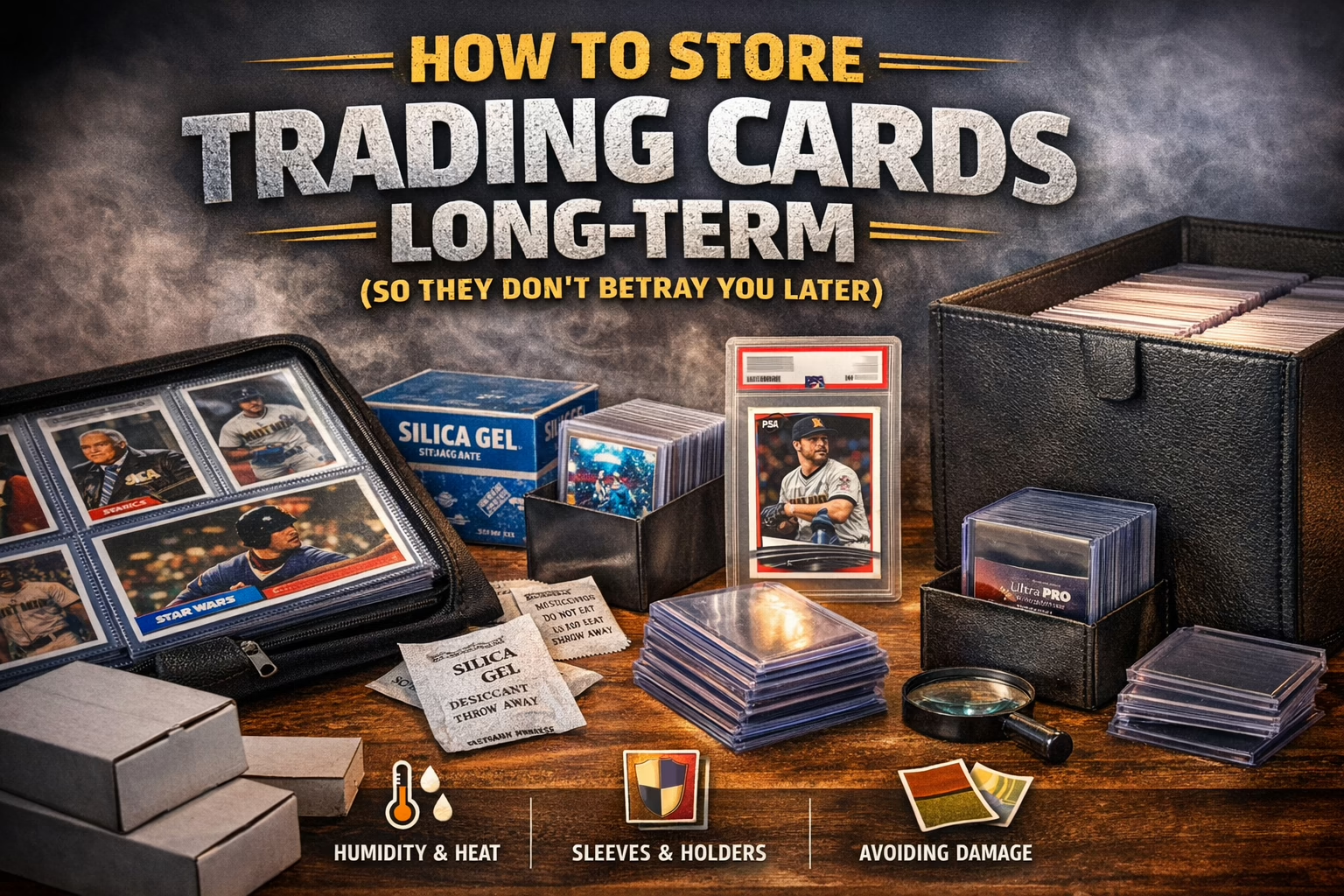
Last updated: August 25, 2026
There is a specific kind of heartbreak that only collectors understand.You pull a card you love. You sleeve it. You put it away “safely.”Years later, you take it out and something is off. The surface looks cloudy. The card has a gentle curve it did not have before. Corners that once looked sharp now feel tired.Nothing dramatic happened. No floods. No fires. No toddlers with crayons.The damage arrived quietly.That is how most trading cards lose value – slowly, politely, and out of sight.This guide explains how to store trading cards long-term so that when you rediscover them, or finally send them for grading, they do not surprise you in the worst way.If you have ever wondered why a card grades lower than expected, storage is often the quiet accomplice. For a deeper look at what modern grading focuses on, see our guide to how trading cards are graded.Start here: If you are preparing cards for the mail, see our How to Ship Trading Cards Safely guide or the Best Trading Card Shipping Supplies and Packing Guide.
How to store trading cards long-term
Quick answer: Sleeve the card, protect it with a rigid holder, store it vertically in a stable indoor environment, and keep it away from humidity, temperature swings, and light. Check your storage once or twice per year and fix small issues before they become permanent.
- Use quality sleeves (polypropylene)
- Use toploaders or card savers for higher-end cards
- Store upright in an opaque box, away from windows and exterior walls
- Use silica gel packs to control moisture
- Avoid pressure, overstuffing, and cheap plastics
Recommended storage supplies (simple and effective)
You do not need a museum-grade vault. You need consistent basics that do not quietly damage your cards over time. For a broader checklist covering sleeves, holders, storage, display, grading, and shipping gear, see our essential trading card supplies guide.
- Penny Sleeves: clear polypropylene sleeves from reputable brands like Ultra Pro or BCW
- Rigid holders: toploaders for storage, card savers for grading candidates
- Team bags: optional, to reduce dust and moisture exposure
- Storage boxes: sturdy, sized so cards stand upright without leaning
- Dividers: to keep rows straight and reduce pressure points
- Silica gel packs: moisture control inside boxes (replace or recharge regularly)
What damages trading cards in storage? (3 silent killers)
Most storage damage is not dramatic. It is small, steady, and boring. Unfortunately, boring is extremely effective.1. Humidity (the invisible enemy)
Humidity is one of the biggest long-term storage risks for paper-based collectibles. Paper and cardstock respond to moisture, and prolonged damp conditions or repeated swings can contribute to:- warping and curling
- surface fogging or haze
- subtle edge swelling
Humidity reality check (how collectors actually lose cards)
Humidity damage often looks like a gentle curve, a slightly cloudy surface, or edges that feel just a bit “puffy.” It is rarely obvious until it is permanent.Best practice:- Keep cards in a dry indoor environment
- Avoid basements, attics, garages, and exterior walls
- Add silica gel packs inside storage boxes
2. Heat and temperature swings
Repeated heat and humidity swings stress paper-based materials and can accelerate deterioration over time. The most practical risks are:- warping or curling
- dimensional movement as materials expand and contract
- faster aging when warmth is combined with high humidity
- Choose a stable indoor location
- Keep cards away from windows, heaters, and electronics that create heat cycles
- Avoid storage areas with frequent seasonal swings
3. Light (especially the kind you ignore)
Direct sunlight is obvious. What gets ignored is prolonged exposure to bright ambient light, especially light that includes UV. Over time, light can:- fade colors and printed details
- discolor paper and some finishes
- age display surfaces even when the change is gradual
Light damage is not just sunlight
Even indirect light can contribute to fading over long periods. If a card sits on display year after year, it is still accumulating light exposure.Best practice:- Store cards in opaque boxes or closed drawers,
- Display only cards you are willing to age
- Rotate display cards seasonally if you insist on showing them off in UV protected displays
What humidity and temperature are safe for cards?
As a practical collector target, roughly 40 to 50 percent relative humidity is a reasonable home-storage range when conditions are stable. The Library of Congress gives a broader preservation range of about 30 to 55 percent relative humidity for most books and paper materials and emphasizes avoiding prolonged warmth, high humidity, and frequent environmental swings.
- Keep cards away from damp spaces such as basements and garages
- Keep them away from heat sources and sunny windows
- Use a hygrometer to monitor the room rather than guessing
- Use silica gel only as a supporting measure and replace or recharge it as needed
Which sleeves, toploaders, and binders should you use?
Penny sleeves: choose carefully
Not all penny sleeves are created equal. Stick with clear polypropylene sleeves from reputable brands like Ultra Pro or BCW.Correct sleeve fit matters more than people think
- If a sleeve is too tight, edges can catch when inserting or removing the card.
- If a sleeve is too loose, the card can shift and scuff inside the holder.
- For chrome and glossy surfaces, avoid dusty sleeves and handle carefully to prevent micro-scratches.
Toploaders vs card savers
Both work, but they serve different purposes.- Toploaders: great for long-term storage and everyday protection
- Card savers: useful for grading submissions; PSA currently asks for clear penny sleeves and standard-size semi-rigid holders for standard trading cards
Toploader storage rules (the stuff that saves corners)
- Store cards upright, not in heavy horizontal stacks.
- Do not pack holders so tight that you have to pry them out.
- Use dividers so rows stay straight and cards do not lean over time.
- If you must stack, keep stacks short and avoid pressure on the bottom cards.
Binders: safe until they aren’t
Binders are great for set building and viewing. They can be risky for chrome cards, high-end parallels, and long-term storage if pages are overfilled or made from cheap plastics.Binder safety checklist
- Use non-PVC pages (look for polypropylene or archival pages).
- Avoid overfilling pockets. Tight pockets can press corners.
- Prefer side-loading pages to reduce slip risk.
- Use a D-ring binder to reduce page pinch.
- Do not store binders near heat sources or windows.
How to store high-end, PC, and bulk cards
High-end singles (future grading candidates)
- penny sleeve plus card saver or toploader
- store vertically, not stacked
- keep in a low-humidity environment
- minimize handling
Personal collection (cards you enjoy)
- quality binders or semi-rigid holders
- avoid pressure and tight stacking
- check once or twice per year
Bulk and set builders
- use sturdy card boxes (not flimsy, crushed cardboard)
- use dividers to prevent leaning
- add silica packs inside boxes
- no rubber bands, ever
Storage setup by use case (quick guide)
- Bulk and set cards: clean, properly sized box with dividers so rows stay upright
- Raw singles you care about: penny sleeve plus correctly sized toploader, stored upright without pressure
- Display cards: correctly sized magnetic or rigid holder, kept away from direct sunlight
- Grading candidates: clean penny sleeve plus the submission holder requested by the grading company
How to store sealed wax (boxes, cases, and packs)
Sealed product is not immune to storage problems. It just hides them until you open it or sell it.- Store sealed product in a stable indoor environment away from humidity and heat.
- Avoid basements and garages, even if the case is wrapped in plastic.
- Do not stack heavy cases so high that the bottom cases bow.
- Store away from odors. Cardboard can absorb smells over time.
What storage mistakes ruin cards over time?
- overstuffing boxes “just for now”
- mixing sleeved and unsleeved cards
- storing cards flat under pressure
- cheap plastics with unknown materials
- never checking stored cards for years
What to do if your cards are already warped
First, do not panic and do not try aggressive fixes. Many quick “flattening” attempts add pressure marks, surface damage, or edge wear.- Step 1: Move the card to a stable indoor environment and let it acclimate without added pressure.
- Step 2: Protect it in a correctly sized holder rather than trying to force it flat.
- Step 3: Correct the humidity or temperature problem in the storage area.
- Step 4: Re-check the card after conditions have stabilized before considering any further action.
Grading-ready card storage checklist
- handle cards by the edges
- wash and dry hands before long handling sessions
- use a clean penny sleeve and the submission holder required by your grading company
- store cards in a stable indoor environment without unnecessary pressure
- replace sleeves or holders when they become dirty, cloudy, split, or damaged
- inspect stored cards periodically so environmental problems do not stay hidden
Trading card storage FAQ
What is the best way to store trading cards long term?
Sleeve the card, protect it with a rigid holder, store it upright in an opaque box, and keep it in a stable indoor environment away from humidity, temperature swings, and light. Add silica packs and check storage once or twice per year.Is it better to store cards in binders or toploaders?
Toploaders are safer for long-term storage and higher-value cards. Binders are fine for set building and viewing, but avoid PVC pages and overfilled pockets, especially for chrome cards.Can humidity damage trading cards?
Yes. Humidity can cause warping, curling, surface haze, and edge swelling. Use silica packs and avoid basements, garages, and exterior walls.Do penny sleeves damage cards over time?
Quality polypropylene sleeves are a standard protective choice. Problems are more likely when a sleeve is dirty, damaged, the wrong size, or made from unsuitable material. Inspect sleeves periodically and replace them when they are no longer clean and intact.What temperature is safe for storing cards?
Stable room temperature is safest. Avoid extreme heat, cold, and repeated temperature swings.Can cards warp even if they are sleeved?
Yes. Sleeves do not block humidity, light exposure, or pressure. Storage conditions still matter.How should I store cards I plan to grade later?
Use a clean penny sleeve, minimize handling, and keep the card in a stable environment. Before submission, follow the grading company’s current holder and packing instructions; PSA currently asks for standard trading cards to be placed in semi-rigid holders.Final thought
Most card damage does not come from bad luck.It comes from good intentions and quiet neglect.If you store your cards well, they will do something rare in this hobby.They will age honestly.And that is often the difference between “I remember pulling this” and “I should have stored this better.”A weekly card rundown is coming
Market movers, set drops, and what is worth watching. Sign-ups open soon — the guides stay free either way.

Cards Mania Editorial Team
Cards Mania is an independent trading card media project covering sports cards, Pokémon, TCG, vintage cards, grading, collecting, card storage and hobby news. Articles are produced by the Cards Mania Editorial Team.
Related reads

MTG The Hobbit 2026: Complete Collector & Player Guide
Magic: The Gathering | The Hobbit released August 14, 2026. This updated guide covers HOB and HOC legality, products, mechanics, Dwarvish cards…
Read more →
Palworld Card Game Guide: Cards and Rules
Palworld OFFICIAL CARD GAME launched worldwide on July 30, 2026. This updated guide covers Dawn of Palpagos, rules, rarities, errata, events and…
Read more →
What Is a Rookie Card? Meaning, Examples and Collector Value
A rookie card is generally one of an athlete’s first mainstream cards after reaching the top professional level, but licensing, set type…
Read more →