Garbage Pail Kids Cards: 1985 Set, Values and Fakes
 Cards Mania Editorial Team
·
·
6 min read
Cards Mania Editorial Team
·
·
6 min read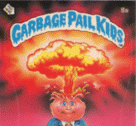
Updated: August 16, 2026
Garbage Pail Kids began as Topps sticker cards in 1985, pairing gross-out art with two character names for each Original Series 1 image. The first set is easy to recognize at a glance and surprisingly complicated to collect well. Card number, A or B name, back, finish, centering, and surface condition can all change what a copy is worth.
How Garbage Pail Kids started
Topps launched the first Garbage Pail Kids series in June 1985 as a parody of Cabbage Patch Kids. Art Spiegelman, then a Topps art director, helped develop the concept with Stan Hart and Len Brown. John Pound produced the front art for the first set. The result mixed bright sticker-card design with jokes, body horror, and names such as Nasty Nick, Dead Ted, and Adam Bomb.
The legal history is often repeated incorrectly. Original Appalachian Artworks, the company behind Cabbage Patch Kids, sued Topps in March 1986 for copyright infringement, trademark infringement, and unfair competition. A federal court issued a preliminary injunction that August. The parties settled in February 1987 for $7 million, and Topps later changed the characters and logo. Coleco was connected to the Cabbage Patch Kids business, but it was not the plaintiff identified in the court record against Topps.
That history matters because early and later designs are not identical. It also explains why a seller’s generic “1980s GPK” label is not enough to identify a card.
What is in the 1985 Original Series 1 set?
The basic set contains 41 pieces of artwork and 82 named cards. The A and B cards for a number share the front image but use different names. Nasty Nick 1a pairs with Evil Eddie 1b. Adam Bomb 8a pairs with Blasted Billy 8b. Mean Gene 41a pairs with Joltin’ Joe 41b.
Backs make a master set harder. PSA identifies alternate award or certificate and checklist backs for the 5a/5b, 8a/8b, and 29a/29b pairs. The stickers also exist with matte and glossy finishes. A seller should identify those details rather than presenting every Series 1 card with the same front as interchangeable.
| Detail | Basic set | Why collectors check it |
|---|---|---|
| Number and name | 1a to 41a and 1b to 41b | The same artwork has two names, so both are needed for the 82-card basic set. |
| Back | Awards, certificates, checklists, and other designs | Cards 5, 8, and 29 have master-set back variations recognized by PSA. |
| Finish | Matte or glossy | Finish affects cataloging, population comparisons, and price. |
| Condition | Centering, corners, surface, sticker and back | Pack damage and poor cutting make clean high-grade copies much harder than casual copies. |
How to identify an original Series 1 card
- Match the exact card number and name. Check that the A or B suffix agrees with the printed character name.
- Compare the front art and border. Series 1 has white-bordered fronts with a removable die-cut sticker, the Garbage Pail Kids logo, and the character name.
- Check the back design. Identify the award, certificate, checklist, or other back and compare it with a reliable checklist.
- Read the copyright and printing details. Later reissues, Chrome cards, and modern anniversary products use different stock, backs, dates, or finishes.
- Do not treat stains as proof. Original wax packs included gum, so gum residue and wax staining are common. They lower condition. A stain does not authenticate a card and can be imitated.
- Compare size, cut, and print quality. Off-centering and miscuts are common on genuine cards, but neither proves authenticity. A high-value key should be compared with known examples or assessed by a reputable authenticator.
What Garbage Pail Kids cards are worth in 2026
Most loose cards are not four-figure collectibles. The largest prices cluster around iconic Series 1 cards in scarce high grades, desirable back and finish combinations, complete high-grade sets, and authenticated unopened material. The exact grade matters more than the phrase “original 1985 card.”
PSA’s Adam Bomb 8a page showed the following figures when checked on August 16, 2026. Prices are the most recent results displayed by PSA, not a promise of the next sale.
| PSA grade | Most recent displayed price | Population |
|---|---|---|
| 10 | $5,401 | 33 |
| 9 | $590.33 | 261 |
| 8 | $330.52 | 445 |
PSA also recorded a $1,375 sale for an Adam Bomb PSA 9 on June 11, 2026, showing why one result should not be treated as a fixed price. Back variation, finish, eye appeal, sale format, and timing can create a wide spread even within one grade.
Use sold listings for the exact number, name, finish, back, and grade. Active asking prices show availability, not what buyers have paid. Compare current Garbage Pail Kids listings on eBay.
Which Series 1 cards do collectors watch?
- Adam Bomb 8a and Blasted Billy 8b: the defining image of the franchise, also used on Series 1 packaging.
- Nasty Nick 1a and Evil Eddie 1b: the first numbered pair, with high-grade copies affected by centering.
- Dead Ted 5a and Jay Decay 5b: a popular early pair with recognized back variations.
- Bony Joanie 29a and Thin Lynn 29b: another pair needed in multiple back combinations for a master set.
- Mean Gene 41a and Joltin’ Joe 41b: the final numbered pair in the basic series.
Popularity does not make every copy rare. A clean, accurately identified card with a strong grade can be scarce while a worn raw copy of the same character remains easy to find.
Buying checklist for vintage GPK cards
- Ask for clear front and back photos outside a sleeve.
- Confirm the series, number, A or B name, back, and finish.
- Look for centering, miscuts, gum residue, wax staining, corner wear, surface damage, and a lifted or peeled sticker.
- Compare recent sold results, not only current asking prices.
- Check the grading certificate directly when buying a slab, but remember that a valid number must still match the physical holder and card.
- For unopened packs, use an experienced seller and authentication appropriate to the price.
Read our history of trading cards for the wider non-sport context.
Compare complete and partial GPK sets
Check current Original Series listings
Browse graded Garbage Pail Kids cards
See more vintage GPK cards
Quick answers
How many cards are in 1985 Garbage Pail Kids Series 1?
The basic set has 82 cards: 41 A cards and 41 B cards numbered 1 through 41. Each numbered pair shares the same artwork with a different character name.
Are Adam Bomb and Blasted Billy the same card?
They use the same artwork, but Adam Bomb is 8a and Blasted Billy is 8b. Each name is a separate card in the 82-card basic set, and both also have back variations.
Does a gum or wax stain prove a GPK card is original?
No. Gum and wax damage are common on cards from original packs, but a stain is a condition problem, not proof of authenticity.
Why are high-grade Series 1 cards expensive?
Off-centering, miscuts, gum, wax, handling, and peeled stickers reduced the number of clean survivors. Character popularity, grade, back, finish, and eye appeal all affect price.
Should every vintage Garbage Pail Kids card be graded?
No. Grading makes the most sense when authenticity, condition scarcity, or expected value can justify the fees and wait. Most common worn cards are better kept raw.
Shop and compare current listings
Browse non-sport card auctions on Whatnot
See recently listed Original Series cards on eBay
Sources
PSA Series 1 collecting guide | PSA Adam Bomb CardFacts | PSA Adam Bomb sale record | Eleventh Circuit court record
A weekly card rundown is coming
Market movers, set drops, and what is worth watching. Sign-ups open soon — the guides stay free either way.

Cards Mania Editorial Team
Cards Mania is an independent trading card media project covering sports cards, Pokémon, TCG, vintage cards, grading, collecting, card storage and hobby news. Articles are produced by the Cards Mania Editorial Team.
Related reads
Would You Cut Up a Classic Spider-Man Comic for a 1/1 Card? Topps Did
Topps turned pieces from 15 classic Spider-Man comic issues into 1/1 Comic Cut cards for 2026 Mint Marvel. We traced the source…
Read more →
Black Lotus Card: Price, History, Rarity and Record Sales Explained
Black Lotus is Magic’s defining trophy card, led by the original Alpha, Beta and Unlimited printings. This guide covers print estimates, authenticity,…
Read more →
1987 Terrorist Attack Trading Cards: The Real Story Behind the Fake Candy Company
The 35-card 1987 Terrorist Attack set used the fictional Piedmont Candy Company name, but creator Charles Mandel was behind it. Contemporary sources…
Read more →