
The History of Trading Cards: From Tobacco Packs to Million-Dollar Pulls
 Cards Mania Editorial Team
·
·
16 min read
Cards Mania Editorial Team
·
·
16 min read
Disclosure:
This post may contain affiliate links. If you buy through them, Cards Mania may earn a small commission at no extra cost to you. We only point you toward stuff we would actually spend our own money on. Read our full affiliate disclosure
Trading cards have been with us for over 140 years. They started as a cheap trick to stop cigarettes getting crushed in a paper packet. Today, a single card can sell at auction for more money than most people earn in a decade. That journey, from flimsy cardboard filler to multi-million-dollar asset class, is one of the strangest and most entertaining stories in the history of popular culture.Whether you collect sports cards, Pokemon, Magic: The Gathering, or something nobody else has heard of yet, you are part of a tradition that stretches back to the gaslit streets of 1880s Richmond, Virginia. Here is the full story, told properly.
The Beginning: Tobacco Cards and the Birth of Collecting (1870s to 1900s)
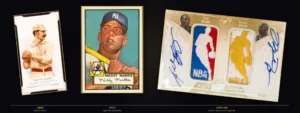
Let’s start with the truly humble origins of this hobby. In the 1870s and 1880s, cigarette manufacturers had a practical problem. Their cigarettes were being sold in soft paper packs and the cigarettes kept getting flattened. The solution? Slip a small stiff cardboard card inside the pack to keep everything from being crushed. Problem solved. Cardboard: 1, Cigarettes: protected.But then someone had a better idea. What if, instead of a blank piece of cardboard, you printed something interesting on it? Something people might actually want to keep? That someone, most historians agree, was Allen and Ginter, a tobacco company founded in Richmond, Virginia in 1875. Their World’s Champions series, launched in 1887, featured boxers, wrestlers, baseball players, and marksmen. They were beautifully illustrated, pocket-sized, and practically irresistible to collect.The genius of the move was the “collect them all” hook. Allen and Ginter printed dozens of different subjects in the same series. You might get a baseball player in one pack and a wrestler in the next. If you wanted the complete set, you had to keep buying. Sound familiar? It should. Every booster pack mechanic in existence today traces its DNA directly back to this 1887 tobacco marketing campaign.Competitors noticed immediately. Within a few years, tobacco companies across the US and UK were producing their own card series: actresses, flags of the world, animals, naval ships, birds, fish, flowers. The subject matter was almost irrelevant. The formula was always the same. Make them collectible. Make them incomplete without the full set. Watch people buy more cigarettes.Allen and Ginter cards from the 1880s are now genuine antiques. A nice example can fetch hundreds of dollars. A truly pristine graded specimen of a top subject can go much higher. If you want to browse what is available today, the selection on eBay is deep.Browse Allen and Ginter vintage cards on eBayBaseball Cards Find Their Footing (1860s to 1890s)
Baseball and trading cards were destined to end up together. The sport had become a national obsession after the Civil War, and wherever there is obsession there is commerce.The earliest known baseball card actually predates Allen and Ginter by nearly two decades. In 1869, a New York sporting goods company called Peck and Snyder printed a promotional card featuring the Cincinnati Red Stockings, the first openly professional baseball team. It was less a collectible and more a business advertisement, but it established the link between baseball and cards that has never been broken.By the 1880s and 1890s, the tobacco card boom had fully absorbed baseball. The Old Judge series from Goodwin and Company, produced between 1887 and 1890, featured hundreds of players in staged photographic poses and is considered one of the most important sets in the hobby’s history. Collectors chase these cards to this day.Then something unexpected happened. In 1890, the major tobacco companies merged into the American Tobacco Company, creating a near-monopoly. With competition gone, the marketing incentive to produce premium card sets largely disappeared. The first golden age of tobacco cards came to an abrupt end. Collectors would have to wait decades for the next chapter.The Gum Era: Bowman, Topps, and the Modern Card Is Born (1930s to 1950s)
The gap between tobacco cards and the next major era is where most people’s knowledge of card history goes blank. What filled it? Gum.In the 1930s, candy and gum companies realized they could run the same playbook the tobacco companies had used: put a card in every pack, make them collectible, and watch kids beg their parents for more. The subject matter shifted toward baseball, football, and popular entertainment. The format was recognizable as what we now call a “trading card,” printed, collectible, numbered, and designed to be traded.Bowman Gum entered the baseball card market in 1948 and quickly became the dominant brand. Their early sets are now highly collectible, particularly their rookie cards of players who went on to become legends. Then, in 1951, a company called Topps entered the market. Topps had started in 1938 as a chewing gum business. By 1952, they had produced what many collectors consider the most important trading card set ever printed.The 1952 Topps Set and the Card That Started Everything
The 1952 Topps baseball set was a landmark. It was bigger than anything that had come before: larger cards, full color, statistics printed on the back. It felt substantial in a way earlier cards did not. And buried inside that set, at card number 311, was a young switch-hitting center fielder from Commerce, Oklahoma, who was about to become the most iconic baseball player of his generation.The 1952 Topps Mickey Mantle is, by almost universal agreement, the single most important card in the hobby. A high-grade copy sold in 2022 for $12.6 million, widely reported as the all-time auction record for any trading card at that time. It is the card that non-collectors have heard of. It is the card that taught the world that cardboard could be worth more than real estate.The story of how those cards became so rare is one of the hobby’s great legends, involving an unsold warehouse, an ocean, and a decision that Topps almost certainly regrets. But that story deserves its own post entirely.Browse 1952 Topps vintage baseball cards on eBayTopps bought out Bowman in 1956 and held a near-monopoly on baseball cards for the next three decades. That monopoly, as we will see, had consequences.The Junk Wax Era: How Greed Nearly Killed the Hobby (Late 1980s to Early 1990s)
Here is the part of the history that every collector needs to understand, because it explains why some old cards are worth a fortune and why others are worth precisely nothing despite being 35 years old.In the mid-1980s, the sports card market began to boom. Collectors were paying real money for rookie cards and vintage stars. Card shops were opening everywhere. The hobby felt like it was on the verge of something enormous.The card manufacturers saw the opportunity and made a catastrophic mistake. They printed more. And then more. And then more again.By the late 1980s, Topps, Donruss, Fleer, Score, and Upper Deck were all competing in the market simultaneously. Print runs ballooned into the hundreds of millions. A 1989 Ken Griffey Jr. Upper Deck rookie card, one of the most celebrated cards of the era, was printed in such enormous quantities that despite being over 35 years old it is still extremely common today. Hundreds of millions of cards from this period still exist in near-mint condition, sitting in shoeboxes and binders in attics across America, because nobody ever threw them away. They were saving them for the fortune they were sure was coming.The fortune never came. Overproduction destroyed scarcity, and scarcity is the entire foundation of card value. By the mid-1990s, the sports card bubble had deflated badly. The hobby did not die, but it contracted sharply. Thousands of card shops closed. The casual collector who had been buying packs as an investment was left with binders full of cards worth less than the binders themselves.The lesson collectors took from the junk wax era has shaped the modern hobby permanently. Print runs matter. A card from a modern set with a print run of 10 or 25 or 50 copies is valuable partly because everyone still remembers what happened when nobody cared about print runs at all.If you want to build a collection that holds value, understanding scarcity is everything. Supplies help too: proper storage in sleeves and toploaders keeps cards in the condition that matters when you eventually want to sell.Card toploaders for protecting your collection (Amazon)Grading Changes Everything: The Rise of PSA and the Certified Card (1991 Onward)
Before professional grading existed, “near mint” meant whatever the seller decided it meant. Two collectors could look at the same card and have a genuinely heated argument about whether it was NM or VG. Buyers buying online or through mail order had no way to verify condition before paying. The whole market ran on trust, which is a polite way of saying it ran on guesswork and hope.Professional Sports Authenticator, better known as PSA, changed all of that when it was founded in 1991. Their model was simple: send them a card, pay a fee, and they would authenticate it, grade it on a scale from 1 to 10, seal it in a tamper-evident plastic case with a unique certification number, and send it back. Suddenly, condition was objective. A PSA 10 in California meant exactly the same thing as a PSA 10 in New York. The market could function with real information.The impact on values was enormous. A raw ungraded copy of a vintage card might sell for $100. The same card in a PSA 8 holder might sell for $500. In a PSA 9, maybe $2,000. In a PSA 10, which might be one of only a handful known to exist, the price could jump to tens or even hundreds of thousands of dollars. Grading did not just protect cards. It stratified the market in ways that made serious investment possible for the first time.Beckett Grading Services (BGS) followed in 1999, offering their own highly respected grading scale including a prestigious 9.5 “Gem Mint” tier that many modern card investors specifically target. CGC Cards entered the market more recently and has gained significant traction, particularly in the Pokemon and non-sports world.Today, grading is a core part of the hobby for anyone treating cards as an asset. It is also the source of significant frustration when turnaround times stretch to months and graders and collectors disagree loudly about what constitutes a crease. But that is a feature, not a bug. The debates keep the community alive and arguing, which is basically the same thing.If you are thinking about submitting cards for grading, you want them in perfect condition before they go in the envelope. That means penny sleeves and semi-rigid holders at minimum.Penny sleeves in bulk for pre-submission protection (Amazon)Magic: The Gathering and the Invention of the Trading Card Game (1993)
Up to this point in our story, trading cards have been purely about collecting. You buy them, you trade them, you put them in binders. The cards themselves do not do anything except exist and look good.That changed on August 5, 1993, when a mathematician named Richard Garfield, working with a small game company called Wizards of the Coast, released Magic: The Gathering at Gen Con in Milwaukee. The concept was genuinely new: a card game where the cards themselves were the game pieces, each player built their own deck from a personal collection, and every card was different. The collectible element was baked into the gameplay. You did not just want rare cards because they were rare. You wanted them because they made you win.The first print run sold out almost instantly. Wizards of the Coast had badly underestimated demand. Cards from that original print run, now known as Alpha and Beta, are among the most valuable trading cards in any category. A Black Lotus from Alpha, the most iconic card in Magic history, has sold for over half a million dollars in top grade (and a record-setting $3 million for a single graded copy in 2024). For a card that was sold in a random booster pack for a few dollars in 1993.Browse Magic: The Gathering vintage cards on eBayMagic’s success launched an entire industry. Within a few years, dozens of trading card games had appeared trying to replicate the formula. Most failed. But one did not.Pokemon and the Hobby Explosion (1996 Onward)
There is “popular” and then there is Pokemon popular, which is its own separate category of cultural phenomenon that has no real comparison.The Pokemon Trading Card Game launched in Japan in 1996, published by Media Factory and based on the already wildly successful Game Boy games. It arrived in North America in 1998. What followed was not so much a trend as a complete derangement of an entire generation of children, their parents, and their school principals.Cards were being bought and sold in school playgrounds at prices neither party fully understood. Teachers were confiscating them during class. The moral panic about children gambling with trading cards was a genuine news story in 1999. Meanwhile, Wizards of the Coast (who held the English-language publishing license before The Pokemon Company took over in 2003) was printing cards as fast as they possibly could and still could not keep up with demand.The Base Set Charizard became the defining card of that first wave. Every kid wanted one. Most never got one. Those who did and kept them in good condition are now sitting on assets worth thousands of dollars, assuming they did not trade it for a sandwich at some point in 2002.Pokemon is not just a nostalgia play. The game has been continuously published for nearly 30 years and remains one of the best-selling TCGs on the planet. New sets generate genuine excitement in the market, and the oldest cards from the Base Set, Jungle, Fossil, and Team Rocket eras in PSA 10 grade are investments that serious money follows.Browse Pokemon cards on eBay, from Base Set to modern setsThe 2020 Boom and Beyond: When Cards Became an Asset Class and Records Kept Falling
For most of the 2000s and 2010s, the hobby was healthy but fairly contained. Sports card collectors collected sports cards. Pokemon people collected Pokemon. Magic players played Magic. The mainstream world was largely unaware that any of this was happening at any serious financial scale.Then 2020 arrived, and everything changed.The pandemic locked millions of people at home with disposable income they could not spend on restaurants or travel, a sudden surge in nostalgia for childhood hobbies, and an internet that made buying and selling cards from your sofa entirely frictionless. The card market went vertical almost overnight.Logan Paul wore a PSA 10 first-edition Base Set Charizard around his neck to his boxing exhibition against Floyd Mayweather in June 2021. That single moment put trading cards in front of an audience that had never thought about the hobby in their lives. YouTube channels dedicated to pack openings were pulling millions of views. eBay sold listings for vintage cards were updating by the hour.The numbers got genuinely extraordinary. A 1952 Topps Mickey Mantle sold for $12.6 million in 2022, widely reported as the all-time record for any trading card at that moment. Then, in August 2025, that record fell. A 2007-08 Upper Deck Exquisite Collection Dual Logoman Autographs card, featuring both Michael Jordan and Kobe Bryant on the same 1-of-1 piece, signed by both players, sold for $12.9 million at Heritage Auctions. It is now the most expensive sports card ever sold at public auction. The card was graded PSA 6. Not a 9. Not a 10. A 6. And it still set the all-time record. That tells you everything you need to know about what the right card, at the right moment, can be worth. These were numbers from a world that had decided cardboard was a legitimate alternative asset class, sitting alongside watches, wine, and fine art.The boom has since cooled from its absolute peak. But the hobby has not returned to where it was before. The market is larger, more international, and more financially sophisticated than it was in 2019. Millions of collectors who entered the hobby during the boom stayed. The floor has moved permanently upward.If you want to track what cards are actually selling for right now, eBay sold listings remain the best real-time market data available to anyone without a subscription to a specialist platform.Check current trading card prices and sold listings on eBayThe Modern Era: Digital Cards, Live Shopping, and What Comes Next
The 2020s have seen the hobby push into genuinely new territory across several fronts.The NFT Experiment
When NFTs were at their peak in 2020 and 2021, it was perhaps inevitable that trading card publishers would experiment with digital card ownership. NBA Top Shot, built on the Flow blockchain, sold “Moments” (short video clips of NBA highlights) as collectible digital assets and generated enormous early sales. At its peak the platform was doing hundreds of millions of dollars in monthly transactions.The experiment produced a genuine insight about the hobby: people like physical cards. You can hold them. You can grade them. You can put them in a case on your shelf. The NFT card market collapsed dramatically from its peak, while physical card values largely held. The hobby survived its digital challenger without much difficulty.Live Shopping and Card Breaks
What has genuinely changed the social experience of the hobby is live shopping. Platforms like Whatnot have built entire ecosystems around live card breaks: sellers open packs in real time while viewers bid on spots in the break or buy cards as they are pulled. It is part shopping, part entertainment, and deeply social in a way that the hobby had never quite managed before.For collectors who cannot or do not want to travel to card shows, live breaks bring the pack-opening experience directly to their phone. For sellers, it is a distribution channel that did not exist five years ago. For the hobby overall, it has brought in a wave of younger collectors who discovered cards through watching breaks on their phones rather than walking into a card shop.The Emerging TCGs
Magic and Pokemon are no longer the only games in town. Lorcana (Disney) launched in 2023 and immediately sold out globally. One Piece TCG has built a serious competitive and collector following. Flesh and Blood has carved out a dedicated player base that takes the game extremely seriously. The TCG market has never had more active competing titles, and new games continue to launch with genuine commercial ambition.For collectors, more competing games means more opportunities to get in early on the next big thing. The person who bought first-edition One Piece cards at retail when they launched made very good returns very quickly. The same pattern has played out with every major TCG launch in the modern era.A good card binder or portfolio keeps your investments protected and organized, whether you are collecting for the game or purely for value.Card binders and portfolios for your collection (Amazon)From Cardboard Filler to Cultural Institution
Here is the thing about trading cards that the $12.9 million auction prices can sometimes obscure: this hobby has always been about something more than money. The tobacco card collectors of the 1880s were not investors. They were people who found something small and beautiful and wanted to keep it. The kids trading Pokemon cards in 1999 were not building portfolios. They were building something to care about.The money followed because people genuinely loved the things. It is worth remembering that when the market gets frothy and everyone starts talking about cards purely as an asset class. The collectors who do best over the long run are almost always the ones who actually like what they are collecting.One hundred and forty years of history backs that up.If you are just getting started with collecting, or you have been at it for years and want to go deeper into any of the eras covered here, CardsMania has you covered. Browse the sports cards section, the Pokemon and anime cards guides, or the vintage and non-sport cards archive to find something that connects with your corner of the hobby.And if you want to see what history looks like with a price tag on it, the best place to start is always the same.Explore vintage and modern trading cards on eBaySources and further reading:- Peck and Snyder official history
- Sports Collectors Daily: Peck and Snyder
- Guinness World Records: first modern trading card game
- PSA: A brief history of baseball cards
- Beckett: Jordan and Bryant Logoman sets auction record at $12.9 million
- Sports Collectors Digest: How Upper Deck made the Jordan and Bryant Logoman card
In the works
A weekly card rundown is coming
Market movers, set drops, and what is worth watching. Sign-ups open soon — the guides stay free either way.

Cards Mania Editorial Team
Cards Mania is an independent trading card media project covering sports cards, Pokémon, TCG, vintage cards, grading, collecting, card storage and hobby news. Articles are produced by the Cards Mania Editorial Team.
Related reads

News & Trends
Trading Card News: Magic God Packs, Brady SSPs, and a $7,700 Mario
CARDS MANIA / WEEKLY · OCTOBER 3-9, 2026 New pack formats, familiar faces and a smaller grading queue lead this week's trading…
Read more →
News & Trends
Card Grading Access: 78 of 250 Markets Documented
Cards Mania documents market-specific grading access in at least 78 of 250 markets under a strict primary-source evidence standard—and explains what that…
Read more →
News & Trends
Trading Card News: $8 Million Flagg, a Record-Chasing Pikachu, and Beckett Hits Pause Again
Cooper Flagg’s $8.04 million debut patch, an $8.4 million Art Academy Pikachu, Beckett grading delays, new card releases and Upper Deck Moments.
Read more →