Licensed vs Unlicensed Trading Cards: The 2026 Collector’s Complete Guide
 Cards Mania Editorial Team
·
·
7 min read
Cards Mania Editorial Team
·
·
7 min read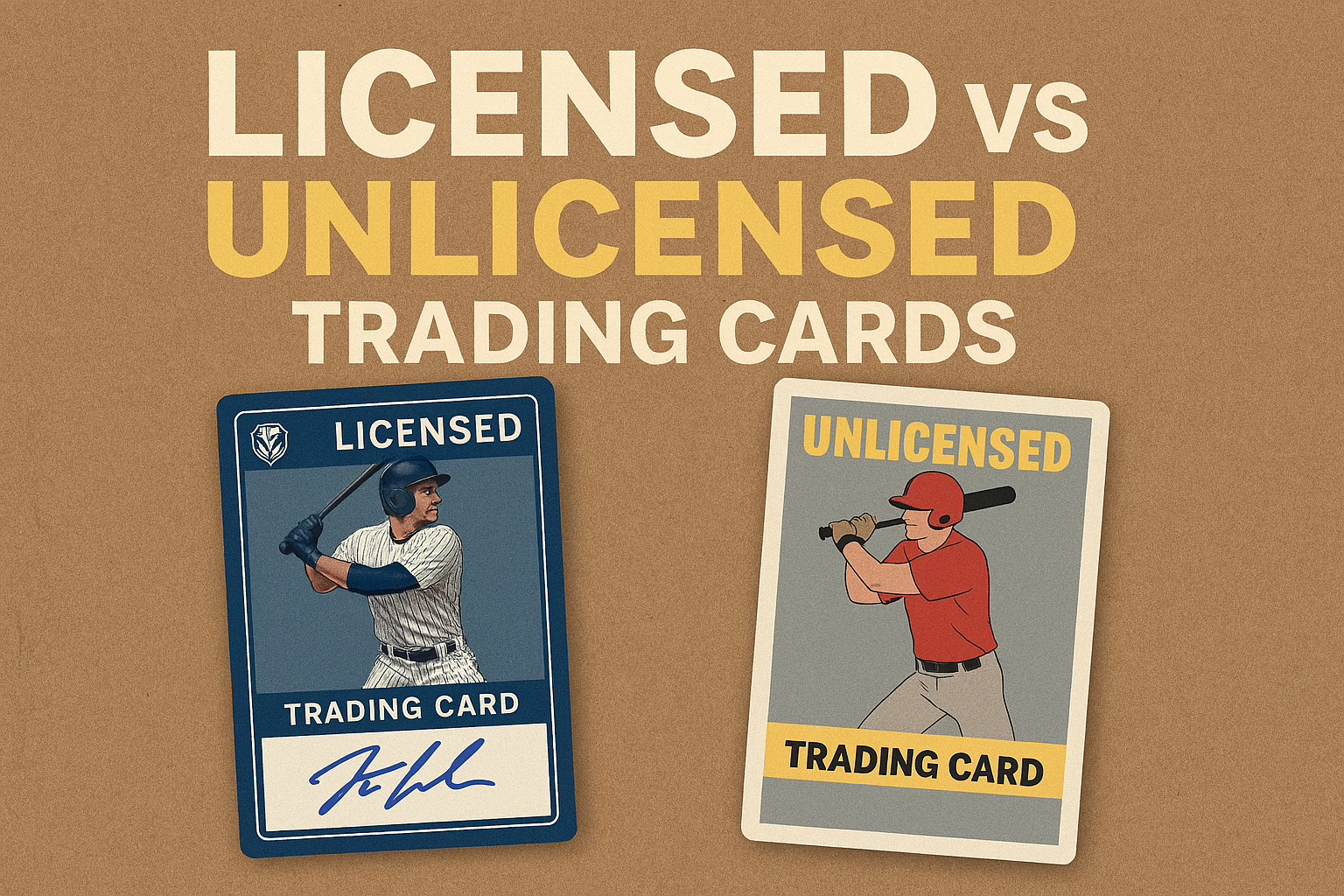
What a License Actually Covers
Two different rights govern sports cards. A league license controls team names, logos, uniforms, and league trademarks. A players association license controls the use of player names and likenesses. When a company holds both, you get full logos and official branding. When it has only one, cards can show players but must avoid team marks. That split is why some products feature star players in generic uniforms while others show full pinstripes.In 2021 Fanatics secured long-term trading-card rights with MLB, the MLBPA, the NBPA and the NFLPA. In January 2022 Fanatics acquired Topps’ trading-card business, which let it produce MLB-branded cards immediately rather than waiting until 2026. These moves are documented by ESPN and by MLB’s official announcement on MLB.com.Who Holds What in Early 2026
Baseball
Licensed: Topps (owned by Fanatics) produces MLB cards with full team branding. Fanatics’ acquisition of Topps enabled immediate MLB production and preserved the flagship Topps and Bowman ecosystems. See MLB.com and ESPN.Basketball and Football
Panini has long been the exclusive licensee for NBA and NFL trading cards, including an exclusive NFL/NFLPA deal that began with the 2016 season. See Cardboard Connection. In 2021, reports confirmed Fanatics’ future rights with the NBPA and NFLPA, with changes expected to reach the marketplace beginning in 2026. Industry coverage of the shift, including the 2023 NFLPA early-termination move and ensuing legal disputes, appears in Dave & Adam’s News and timeline roundups at Blowout Buzz.Hockey
Upper Deck remains the exclusive licensed producer for NHL trading cards, a position reaffirmed by multi-year agreements with the NHL and NHLPA and a 2024 extension with the NHL Alumni Association. See the NHLPA’s exclusive announcement from 2014 at NHLPA.com and the 2024 NHLAA extension on PR Newswire.How Last Season’s Licensed Card Becomes Next Season’s Unlicensed
It is jarring the first time you see it. A brand issues fully licensed cards one year. A season later it shows the same athletes in logo-free uniforms. This happens when the manufacturer retains a players association license or individual autograph deals but loses the league license. The result is legal to produce but cannot display team names or marks. Baseball provided the clearest case over the last decade. Topps held MLB’s exclusive, while other companies operated with player rights only, so their cards showed real players without MLB logos. After Fanatics secured future MLB/MLBPA deals in 2021 and bought Topps in 2022, MLB-branded production continued under Topps, while unlicensed baseball from other makers persisted. See ESPN’s 2021 coverage and Cardboard Connection. Football and basketball are now experiencing their own transition window, with the 2023 NFLPA termination letter and subsequent litigation covered by Dave & Adam’s and broader industry timelines at Blowout Buzz.Why this matters for collectors
Rookie card hierarchies tend to follow the fully licensed, logo-bearing card. When a license flips, the brand that defines the rookie moment can change. If you collect for long-term value, the safest play usually remains the fully licensed flagship rookie after a transition. If you chase early autographs or unique designs, unlicensed products often deliver more ink at lower entry prices.Current Examples To Know in 2026
Licensed headliners
Topps Flagship, Topps Chrome, Bowman (MLB): The definitive MLB record, now firmly under Fanatics via Topps. See MLB.com and ESPN.Unlicensed but notable
Leaf Metal Baseball / Leaf Trinity: Autograph-forward checklists with vibrant parallels, no MLB logos. Reviewed at Cardlines.Onyx Vintage Baseball: On-card autographs, prospect-driven checklists, and vintage aesthetics, again logo-free. Details at Beckett and Cardlines.Wild Card (football/basketball prospects): NIL and prospect lines without league licenses; also part of recent legal headlines. See Sports Collectors Daily.Collector Psychology: Why Logos Usually Win
Authenticity is visual. Team marks and league branding make a card feel like part of the sport’s official record. That is why licensed rookies in flagship lines usually command the broadest demand over time. Unlicensed products can still shine where they excel: early autographs, bold designs, and better odds for on-card signatures at a given price point. For context on MLB vs MLBPA rights and why some products show players without team marks, see ESPN and the consolidation explainer at All Vintage Cards.Licensed vs Unlicensed: Side-by-Side
| Category | Licensed cards | Unlicensed cards |
| Logos & uniforms | Full team names, marks, and league branding | No team marks; generic or edited imagery |
| Rookie hierarchy | Defines flagship rookies in most sports | First autos and pre-rookie content |
| Design flexibility | Bound by league rules and brand heritage | Often more experimental |
| Typical price behavior | Higher long-term values; wider demand | Lower entry; prospect-driven spikes |
Market Behavior You Can Actually Use
Across marketplaces, licensed rookies from flagship lines tend to earn premiums over unlicensed equivalents. Prospect-driven unlicensed products can spike early, especially when they secure first autographs, but once licensed rookies release, attention usually re-centers on logo cards. This pattern has been reinforced by Fanatics’ acquisition of Topps and the continued primacy of Topps/Bowman in MLB. See ESPN and SportsPro.Why this matters for collectors
If you collect for the long haul, licensed rookies are usually the anchor. If you collect for ink and discovery, unlicensed products can be a smart complement. Many successful collections do both; the key is knowing which lane you are in before you rip a box.Practical Buying Tips in 2026
Follow the licenses. For baseball, Topps and Bowman are the fully licensed backbone under Fanatics via Topps (MLB.com). For hockey, Upper Deck remains exclusive (NHLPA). For football and basketball, watch 2026 announcements as Fanatics-era rights begin to surface and legacy releases wind down (Blowout Buzz).Learn More
For broader context and collector-friendly explainers, explore:Conclusion
Licensed and unlicensed products serve different missions. Logos and league marks make history and tend to anchor long-term value. Unlicensed creativity brings early autographs, bold ideas, and price points that invite more ripping. In a year when Fanatics-era licenses meet long-running incumbents, your best edge is clarity. Know your lane, study the licenses, and enjoy the chase. If you accidentally fall for a logo-free rookie and it makes you smile, that is fine too. The heart wants what it wants; just make sure the next one has the pinstripes you were looking for.Ready to buy or explore? Find trading cards on TCGplayer, shop live auctions on Whatnot, or search sold listings on eBay.
A weekly card rundown is coming
Market movers, set drops, and what is worth watching. Sign-ups open soon — the guides stay free either way.

Cards Mania Editorial Team
Cards Mania is an independent trading card media project covering sports cards, Pokémon, TCG, vintage cards, grading, collecting, card storage and hobby news. Articles are produced by the Cards Mania Editorial Team.
Related reads
MTG The Hobbit 2026: Complete Collector & Player Guide
Magic: The Gathering | The Hobbit released August 14, 2026. This updated guide covers HOB and HOC legality, products, mechanics, Dwarvish cards…
Read more →
Palworld Card Game Guide: Cards and Rules
Palworld OFFICIAL CARD GAME launched worldwide on July 30, 2026. This updated guide covers Dawn of Palpagos, rules, rarities, errata, events and…
Read more →
What Is a Rookie Card? Meaning, Examples and Collector Value
A rookie card is generally one of an athlete’s first mainstream cards after reaching the top professional level, but licensing, set type…
Read more →