
Digital vs Physical Trading Cards: Ownership, Risk and Value
 Cards Mania Editorial Team
·
·
8 min read
Cards Mania Editorial Team
·
·
8 min read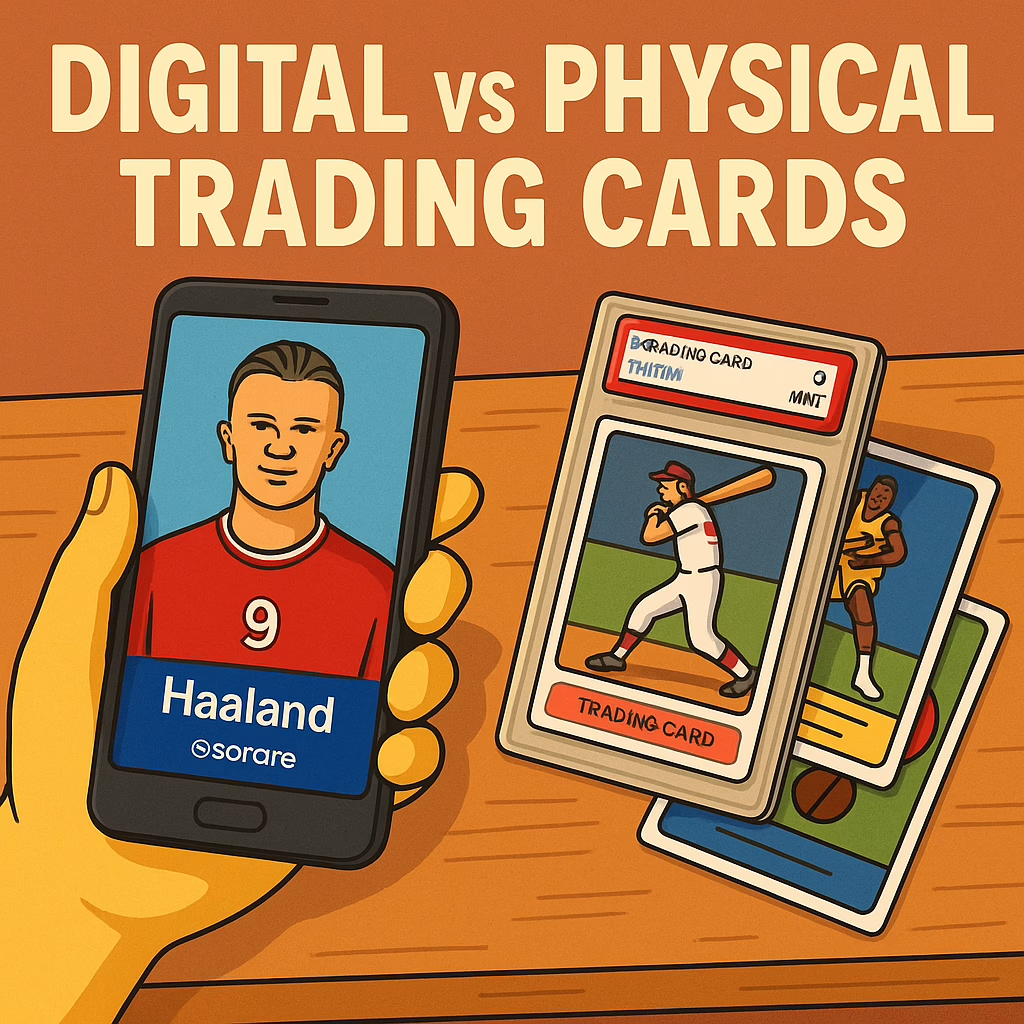
Updated August 16, 2026. Checked against current platform rules, ownership models and collector risks.
Digital and physical trading cards can serve the same collecting instinct, but they do not give you the same thing. A physical card is an object you can hold, grade, store and resell through a mature network of dealers and auction houses. A digital card may be a licensed image in an app, an on-chain token, a fantasy-game asset or a claim connected to a physical card in a vault. Those models carry different rights and risks.
Digital vs physical trading cards at a glance
| Question | Physical card | Digital card |
|---|---|---|
| What do you own? | A tangible object, unless it is held by a vault or custodian | A platform license, token or account-based item, depending on the product |
| Main value drivers | Player or character demand, scarcity, condition, grade and history | Utility, license, edition rules, platform demand and continued support |
| Main risks | Damage, counterfeits, grading costs, theft and storage | Platform closure, license loss, wallet mistakes, rule changes and thin markets |
| Best feature | You can hold and display it, with no app required | Fast transfer, live game utility and no physical storage |
| Resale reality | Established marketplaces, dealers, shows and auction houses | Liquidity depends heavily on the specific platform and community |
Four kinds of digital card ownership
The phrase “digital trading card” covers products that work very differently. Before buying, identify which model you are being offered.
1. App-based collectibles
The item lives inside a publisher’s account system. You may be able to trade it inside the app, but export can be restricted or impossible. Your access depends on the service and its terms. A screenshot is not the collectible because the account record, edition and permitted actions create the usable item.
2. On-chain collectibles
A blockchain can provide a public ownership and transaction record. It does not remove every third party. The artwork, league license, game utility, marketplace and wallet interface can still depend on companies. The token may remain in a wallet if a service closes, while the experience that made it desirable may not.
3. Fantasy-utility cards
Sorare is the clearest trading-card example. Its licensed Pro cards combine collectible scarcity with fantasy competition. The current football and MLB structures use named scarcity levels, while card utility depends on the sport, season and competition rules. Sorare also moved its card infrastructure to Solana in late 2025, so older articles that describe every current Sorare card as an Ethereum asset are dated. Read the platform’s current card and scarcity guide before spending.
You can browse the platform through the Cards Mania referral link: explore Sorare. A referral does not change the need to check eligibility, competition rules and local restrictions.
4. Tokenized or vaulted physical cards
Some services hold a physical card in a vault while an account or token records the beneficial owner. This is not the same as owning a purely digital collectible. The object exists, but possession, withdrawal, insurance and fees depend on the custodian’s contract. Read the redemption rules before treating the record as a substitute for having the card in hand.
What ownership really means
Physical ownership is easiest to understand when the card is in your possession. You control where it goes, but you also carry the risks of damage, loss and theft. If the card is stored in a vault, your position becomes partly contractual because another company holds it.
Digital ownership ranges from a revocable account license to control of a transferable token. A public ledger can verify which wallet controls a token and trace transfers. It cannot guarantee a sports license, future game rewards, marketplace buyers or permanent access to off-chain artwork. “On-chain” and “independent of every company” are not synonyms.
Value and liquidity are not the same
A scarce item can still be difficult to sell. Physical cards benefit from decades of price history, grading standards, card shows, local shops and large marketplaces. That does not make every physical card liquid. Modern base cards, obscure parallels and overprinted products can sit unsold even when asking prices look high.
Digital markets can move quickly when a player has a big game or a competition deadline approaches. They can also become thin when rewards change, a season ends or users leave. Check completed transactions, the number of active bidders and the spread between realistic bids and ambitious listings. Never use a single asking price as proof of value.
The largest public trading-card sale records still belong to physical cards, but that fact is not a promise about the card in your hand. At ordinary price levels, demand for the exact set, player, grade or platform matters more than headlines about record sales.
Digital card risk checklist
- Rights: Is the item a transferable token, an in-app license or a claim on a vaulted object?
- License: What happens if the publisher loses rights to the league, player or artwork?
- Utility: Can rules, scoring bonuses or eligible competitions change after purchase?
- Access: Can you export the item, and can you recover the wallet or account?
- Supply: Is the stated edition cap verifiable, and can new versions dilute attention?
- Liquidity: Are there recent completed sales with more than one serious buyer?
- Costs: Check marketplace fees, currency conversion, withdrawal costs and taxes.
- Jurisdiction: Confirm age, identity and location rules before depositing money.
When physical cards are the better choice
Physical cards usually fit collectors who want an object to display, share at a show, submit for grading or keep without relying on an app. They also offer broader resale routes. You can compare listings across TCGplayer, live sellers on Whatnot and current eBay listings. Compare sold results, fees and condition, not just the highest listing.
The tradeoff is work. Physical cards need sleeves, rigid holders, safe storage and careful shipping. Valuable collections may also need insurance and an inventory. Grading can make condition easier to communicate, but it adds cost and does not guarantee a profit.
When digital cards make sense
Digital cards make the most sense when you genuinely use the platform. A fantasy card that helps build weekly lineups has value beyond a static image. Fast transfers and no shipping are useful for collectors spread across countries. Transparent edition data can also be easier to inspect than the unknown print run of a physical parallel.
That case weakens if you are buying only because a platform calls an item scarce. Utility can change. A one-of-one token in an inactive product may have less demand than a widely recognized physical card with thousands of copies. If the platform vanished tomorrow and you would no longer want the item, size the purchase accordingly.
The strongest answer is often a hybrid collection
You do not need to choose one format for everything. A collector might keep favorite rookies and vintage cards physically, use digital cards for fantasy competition and rely on a vault only for cards that are actively traded. The important step is to match the format to the job.
| Your main goal | Better starting point | Why |
|---|---|---|
| Display and long-term personal collecting | Physical | The object and its condition are central to the experience |
| Fantasy play and live scoring | Digital utility card | The card can participate directly in the game |
| Fast international transfer | Digital, after platform checks | No parcel, customs delay or physical damage in transit |
| Established grading and auction ecosystem | Physical | More mature standards and sales channels |
| Trading a high-value physical card without repeated shipping | Reputable vault, after reading terms | Custody can reduce repeated handling, but adds counterparty risk |
If Sorare’s game utility is what interests you, review the current rules first and then see available Sorare cards. Treat entry cost as entertainment money unless you have independently verified the market.
Final verdict
Physical cards remain the safer default for a collection built around lasting access, display and established resale channels. Digital cards can be worthwhile when their utility is clear and the platform risk is acceptable. Neither format is automatically an investment, and scarcity alone does not create demand.
Start with the experience you want. If you want to hold the card and keep it without a login, buy physical. If you want to use the card in a living game and accept that rules can change, digital can be the better tool. A careful collector can enjoy both without pretending they carry the same rights.
Digital vs physical trading cards FAQ
Are digital trading cards real collectibles?
Yes, if a platform or blockchain can identify the edition and owner. Their utility and resale value still depend on demand, licenses, technical access and platform rules.
Do you fully own an NFT trading card?
You may control the token, but that does not automatically transfer copyright, guarantee game utility or preserve a league license. Read the product and marketplace terms.
Are physical cards safer than digital cards?
They avoid app and platform shutdown risk when kept in hand, but they can be damaged, lost, stolen or counterfeited. Each format has a different risk profile.
Can digital trading cards be graded?
They do not need condition grading in the physical sense. Authenticity, edition, ownership and transaction history may instead be verified through the platform or blockchain.
Which format is better for beginners?
Physical cards are usually easier to understand and compare across several marketplaces. Beginners choosing digital cards should first learn the platform’s ownership, withdrawal, supply and utility rules.
Check current prices for trading cards:
A weekly card rundown is coming
Market movers, set drops, and what is worth watching. Sign-ups open soon — the guides stay free either way.

Cards Mania Editorial Team
Cards Mania is an independent trading card media project covering sports cards, Pokémon, TCG, vintage cards, grading, collecting, card storage and hobby news. Articles are produced by the Cards Mania Editorial Team.
Related reads
What Is a Rookie Card? Meaning, Examples and Collector Value
A rookie card is generally one of an athlete’s first mainstream cards after reaching the top professional level, but licensing, set type…
Read more →
Black Lotus Card: Price, History, Rarity and Record Sales Explained
Black Lotus is Magic’s defining trophy card, led by the original Alpha, Beta and Unlimited printings. This guide covers print estimates, authenticity,…
Read more →
Digimon Trading Cards: The Complete Collector’s Guide (History, Value & Where to Buy)
Disclosure: This post contains affiliate links. If you purchase through them, we may earn a small commission at no extra cost to…
Read more →