
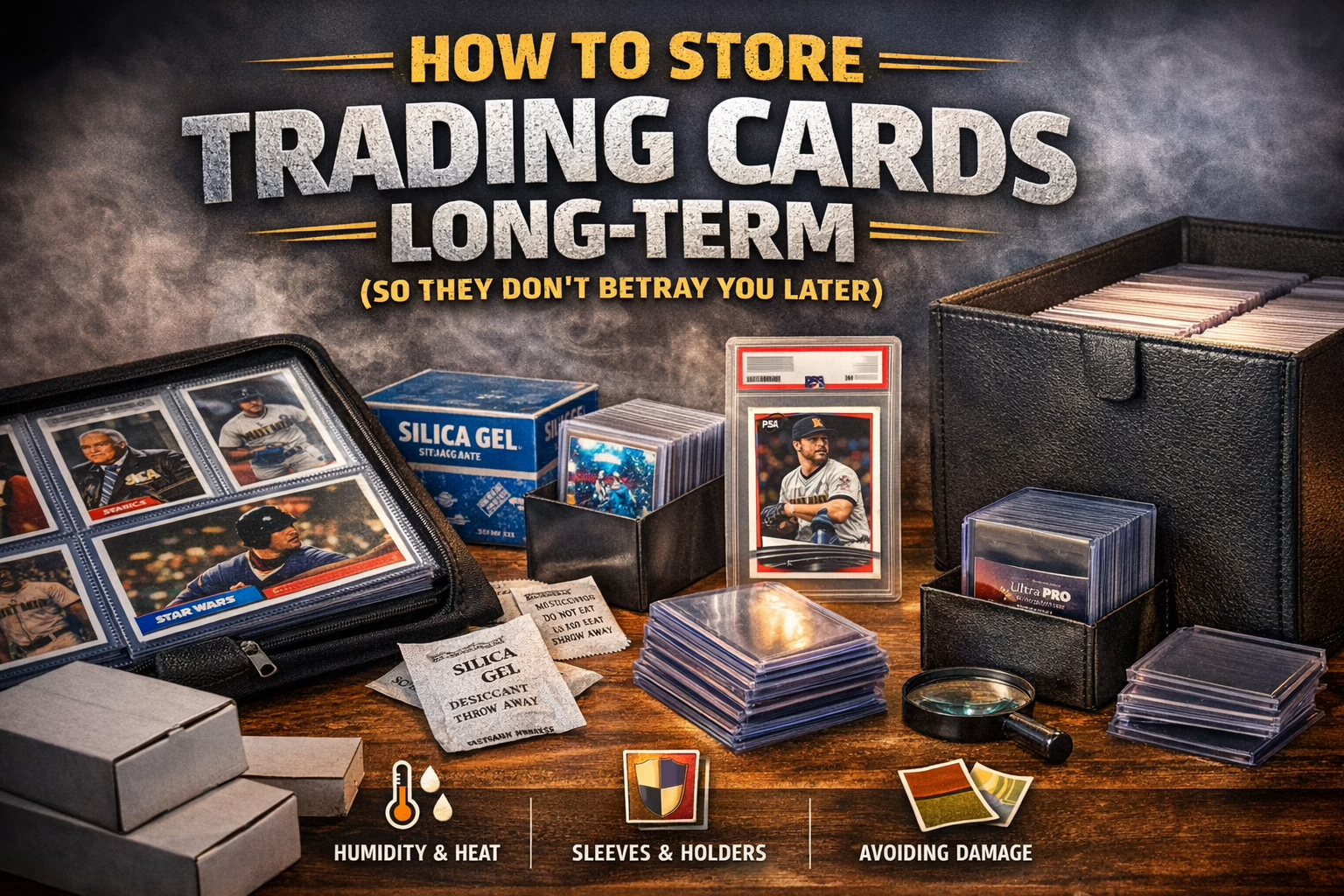
You pull a card you love.
You sleeve it.
You put it away “safely.”
Years later, you take it out and something is off. The surface looks cloudy. The card has a gentle curve it did not have before. Corners that once looked sharp now feel tired.
Nothing dramatic happened. No floods. No fires. No toddlers with crayons.
The damage arrived quietly.
That is how most trading cards lose value – slowly, politely, and out of sight.
This guide explains how to store trading cards long-term so that when you rediscover them, or finally send them for grading, they do not surprise you in the worst way.
If you have ever wondered why a card grades lower than expected, storage is often the quiet accomplice. For a deeper look at what modern grading focuses on, see can a robot grade your cards.
Start here: If you want to see the full hub, read our
Trading Card Storage & Shipping Guide.
If you need to mail cards safely, see
Best Trading Card Shipping Supplies Every Collector Needs.
How to store trading cards long-term
Quick answer: Sleeve the card, protect it with a rigid holder, store it vertically in a stable indoor environment, and keep it away from humidity, temperature swings, and light. Check your storage once or twice per year and fix small issues before they become permanent.
- Use quality sleeves (polypropylene)
- Use toploaders or card savers for higher-end cards
- Store upright in an opaque box, away from windows and exterior walls
- Use silica gel packs to control moisture
- Avoid pressure, overstuffing, and cheap plastics
Recommended storage supplies (simple and effective)
You do not need a museum-grade vault. You need consistent basics that do not quietly damage your cards over time.
- Penny Sleeves: clear polypropylene sleeves from reputable brands like Ultra Pro or BCW
- Rigid holders: toploaders for storage, card savers for grading candidates
- Team bags: optional, to reduce dust and moisture exposure
- Storage boxes: sturdy, sized so cards stand upright without leaning
- Dividers: to keep rows straight and reduce pressure points
- Silica gel packs: moisture control inside boxes (replace or recharge regularly)
If you want a shopping list that covers sleeves, holders, and storage materials, see our shop on Linkree.
What damages trading cards in storage? (3 silent killers)
Most storage damage is not dramatic. It is small, steady, and boring. Unfortunately, boring is extremely effective.
1. Humidity (the invisible enemy)
Humidity is the number one long-term card killer. Paper absorbs moisture. Cardstock expands. Coatings react. Over time, this causes:
- warping and curling
- surface fogging or haze
- subtle edge swelling
Humidity reality check (how collectors actually lose cards)
Humidity damage often looks like a gentle curve, a slightly cloudy surface, or edges that feel just a bit “puffy.” It is rarely obvious until it is permanent.
Best practice:
- Keep cards in a dry indoor environment
- Avoid basements, attics, garages, and exterior walls
- Add silica gel packs inside storage boxes
If the room feels comfortable to you, that does not mean it is safe for cardboard.
2. Heat and temperature swings
Repeated heating and cooling causes materials to expand and contract at different rates. Over time, this can lead to:
- subtle warping
- micro-cracks in surface coatings
- weakened corners and edges
Best practice:
- Choose a stable indoor location
- Keep cards away from windows, heaters, and electronics that create heat cycles
- Avoid storage areas with frequent seasonal swings
Think boring. Cards thrive in boring environments.
3. Light (especially the kind you ignore)
Direct sunlight is obvious. What gets ignored is long-term ambient light and UV exposure from windows and lamps. Over time, light can:
- fade colors
- dull chrome finishes
- weaken inks and printed details
Light damage is not just sunlight
Even indirect light can slowly fade ink and dull chrome. If a card sits on display for a year, it is basically doing a slow endurance challenge against physics.
Best practice:
- Store cards in opaque boxes or closed drawers,
- Display only cards you are willing to age
- Rotate display cards seasonally if you insist on showing them off in UV protected displays
That display shelf looks great. It just is not a museum.
What humidity and temperature are safe for cards?
As a practical collector target, aim for about 40 to 50 percent humidity and avoid major temperature swings. Stable indoor room conditions are safer than trying to store cards “somewhere cool” that actually swings all year.
- Keep cards away from damp spaces (basements, garages)
- Keep them away from heat sources and sunny windows
- Use silica gel packs and refresh them regularly
If you collect high-end chrome, autographs, or cards you plan to grade, humidity control matters even more.
Which sleeves, toploaders, and binders should you use?
Penny sleeves: choose carefully
Not all penny sleeves are created equal. Stick with clear polypropylene sleeves from reputable brands like Ultra Pro or BCW.
Correct sleeve fit matters more than people think
- If a sleeve is too tight, edges can catch when inserting or removing the card.
- If a sleeve is too loose, the card can shift and scuff inside the holder.
- For chrome and glossy surfaces, avoid dusty sleeves and handle carefully to prevent micro-scratches.
Replace sleeves periodically. Old sleeves can trap dust and moisture and can turn “protected” into “slowly sanded.”
Toploaders vs card savers
Both work, but they serve different purposes.
- Toploaders: great for long-term storage and everyday protection
- Card savers: often preferred for grading submissions because they apply less pressure on edges
For higher-end cards, sleeve first, then holder. Always!
Toploader storage rules (the stuff that saves corners)
- Store cards upright, not in heavy horizontal stacks.
- Do not pack holders so tight that you have to pry them out.
- Use dividers so rows stay straight and cards do not lean over time.
- If you must stack, keep stacks short and avoid pressure on the bottom cards.
Binders: safe until they aren’t
Binders are great for set building and viewing. They can be risky for chrome cards, high-end parallels, and long-term storage if pages are overfilled or made from cheap plastics.
Binder safety checklist
- Use non-PVC pages (look for polypropylene or archival pages).
- Avoid overfilling pockets. Tight pockets can press corners.
- Prefer side-loading pages to reduce slip risk.
- Use a D-ring binder to reduce page pinch.
- Do not store binders near heat sources or windows.
How to store high-end, PC, and bulk cards
High-end singles (future grading candidates)
- penny sleeve plus card saver or toploader
- store vertically, not stacked
- keep in a low-humidity environment
- minimize handling
If you plan to grade it someday, store it like graders are already watching.
Condition matters even more on higher-end parallels and short prints. If you want a refresher on what counts as a premium variation, see
trading card variations: parallels, SPs, and value.
Personal collection (cards you enjoy)
- quality binders or semi-rigid holders
- avoid pressure and tight stacking
- check once or twice per year
Enjoying your collection is allowed. Just do not suffocate it.
Bulk and set builders
- use sturdy card boxes (not flimsy, crushed cardboard)
- use dividers to prevent leaning
- add silica packs inside boxes
- no rubber bands, ever
Bulk cards warp too, and warped bulk becomes warped hits later.
Storage setup by value tier (quick guide)
- Under $5: sleeve if you want, store upright with dividers
- $5 to $50: sleeve plus toploader, store upright, avoid pressure
- $50 to $250: sleeve plus card saver or premium rigid holder, add team bag
- $250+: consider one-touch style protection or slab-like storage, plus tighter humidity control
How to store sealed wax (boxes, cases, and packs)
Sealed product is not immune to storage problems. It just hides them until you open it or sell it.
- Store sealed product in a stable indoor environment away from humidity and heat.
- Avoid basements and garages, even if the case is wrapped in plastic.
- Do not stack heavy cases so high that the bottom cases bow.
- Store away from odors. Cardboard can absorb smells over time.
Related reading:
why hobby boxes sell out before release.
What storage mistakes ruin cards over time?
- overstuffing boxes “just for now”
- mixing sleeved and unsleeved cards
- storing cards flat under pressure
- cheap plastics with unknown materials
- never checking stored cards for years
One more mistake: confusing storage damage with printing issues.
If you collect errors, this matters a lot. See
error cards and misprints: how to tell misprints from damage.
What to do if your cards are already warped
First, do not panic and do not try aggressive fixes. Many quick “flattening” attempts add pressure marks, surface damage, or edge wear.
- Step 1: Move the card to a stable indoor environment for at least 2 weeks.
- Step 2: Store it upright in a rigid holder with no extra pressure.
- Step 3: Improve humidity control in the storage area.
- Step 4: Re-check after 2 to 4 weeks. Some cards relax naturally when conditions stabilize.
If the card is high-end and you are unsure, ask experienced collectors before attempting any flattening method. The fastest way to “fix” a card is sometimes the fastest way to create a permanent flaw.
Grading-ready card storage checklist
- handle cards by the edges
- wash hands before long handling sessions
- use a sleeve plus card saver for grading candidates
- store cards vertically in a stable indoor environment
- replace sleeves every few years
- check stored cards annually
Condition is not just pulled. It is maintained.
Trading card storage FAQ
What is the best way to store trading cards long term?
Sleeve the card, protect it with a rigid holder, store it upright in an opaque box, and keep it in a stable indoor environment away from humidity, temperature swings, and light. Add silica packs and check storage once or twice per year.
Is it better to store cards in binders or toploaders?
Toploaders are safer for long-term storage and higher-value cards. Binders are fine for set building and viewing, but avoid PVC pages and overfilled pockets, especially for chrome cards.
Can humidity damage trading cards?
Yes. Humidity can cause warping, curling, surface haze, and edge swelling. Use silica packs and avoid basements, garages, and exterior walls.
Do penny sleeves damage cards over time?
Quality polypropylene sleeves are safe. Cheap or aging sleeves can trap dust and moisture or cause surface haze. Replace sleeves periodically.
What temperature is safe for storing cards?
Stable room temperature is safest. Avoid extreme heat, cold, and repeated temperature swings.
Can cards warp even if they are sleeved?
Yes. Sleeves do not block humidity, light exposure, or pressure. Storage conditions still matter.
How should I store cards I plan to grade later?
Use a penny sleeve plus a card saver, store the card vertically, minimize handling, and keep humidity controlled. Check stored cards at least once per year.
Final thought
Most card damage does not come from bad luck.
It comes from good intentions and quiet neglect.
If you store your cards well, they will do something rare in this hobby.
They will age honestly.
And that is often the difference between “I remember pulling this” and “I should have stored this better.”

Leave a Reply